
 Ekani Ella
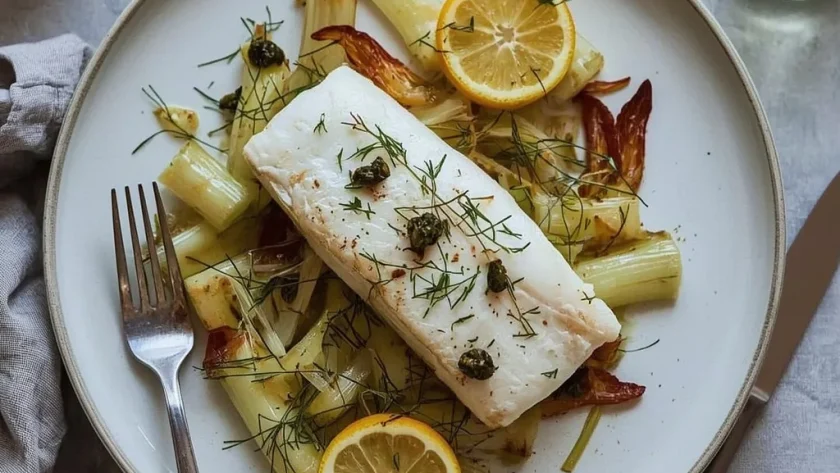
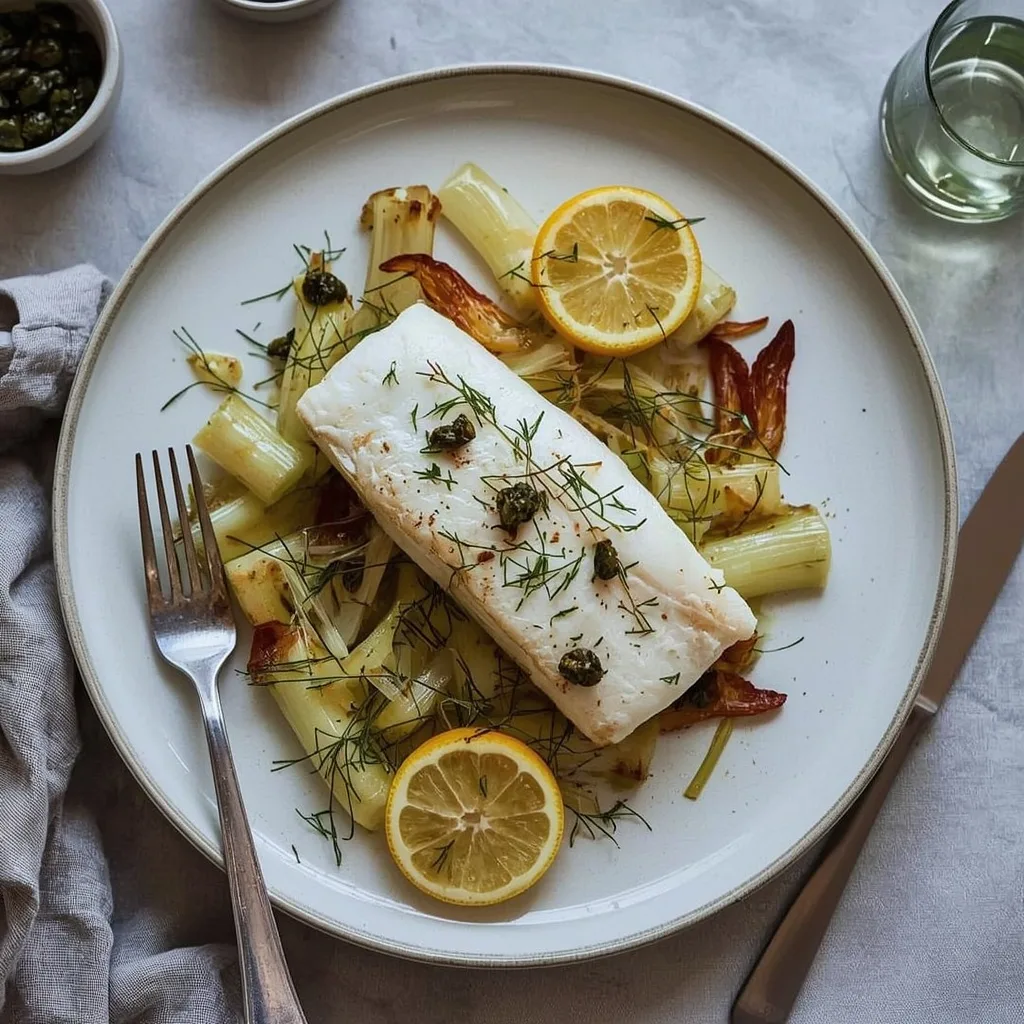
A Mary Berry Sea Bass Recipe is one of those weeknight dishes that looks far more worked-on than it needs to be: snowy-white fillets roasted skin-side up on sweet, caramelised fennel, finished with a lemon, dill and caper butter. British roasting at its most straightforward, with one tray and one small bowl doing most of the work.
Forty minutes from fridge to table, and it sits at beginner level once you know two things — dry the skin properly and give the fennel room. Best for a Friday supper or a small dinner party where you would rather be sitting down than standing at the hob.
What is Mary Berry Sea Bass Recipe?
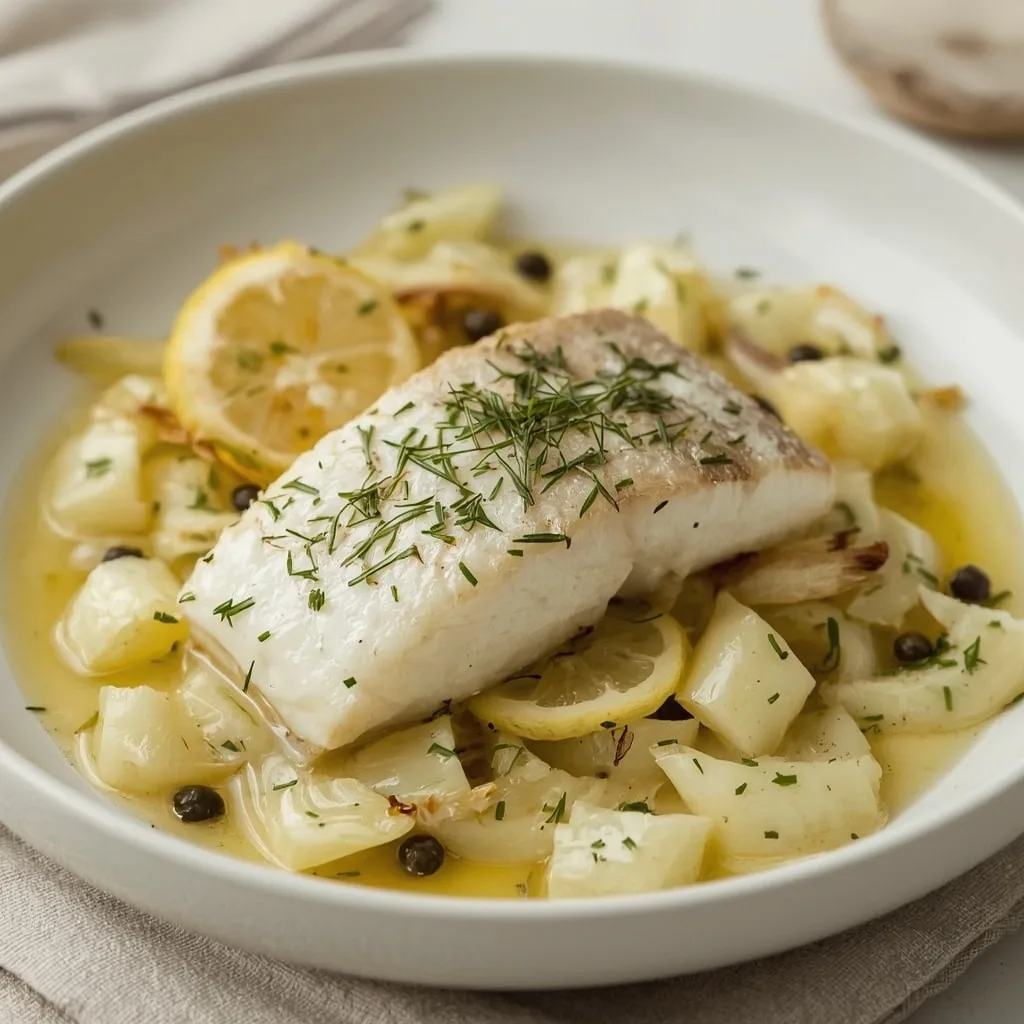
This is a one-tray roast. Sliced fennel bulbs soften and caramelise at 400°F / 200°C, then sea bass fillets sit on top for the final 10 to 12 minutes under dollops of herb butter. The flesh comes out silky and just-opaque while the skin turns lacquered and crisp. Sweet aniseed from the fennel meets a bright hit of lemon, dill and chopped capers. It suits a British dinner table any night of the week, though it feels a little special on a Saturday.
Why This Recipe is Worth Trying
There are plenty of fish suppers out there, but this one earns its place for a handful of practical reasons.
- One tray, one bowl — everything roasts on a single lined baking sheet, so washing up is a fork and a saucepan at most.
- Timing that forgives you — the fennel takes 15 minutes and the fish takes 10 to 12, leaving a comfortable gap to set the table.
- Presentation without stress — four fennel mounds give you four neat portions, and the whole thing plates itself straight from the parchment.
- The herb butter pulls double duty — half goes on the fish before roasting, half becomes a warm caper sauce at the end.
- Fennel soaks up everything — those sweet, aniseedy slices catch the buttery juices that would otherwise run off the fish.
Essential Ingredients to Make Mary Berry Sea Bass Recipe
Thirteen items, most of which you may already have in the fridge door or the herb drawer.
For the Fennel Base
- 2 medium fennel bulbs (about 1 lb / 450 g total) — trimmed, halved lengthwise and sliced 1/4 inch thick; look for tight, heavy bulbs with no browning at the cut ends.
- 2 tbsp extra-virgin olive oil — enough to gloss every slice so the edges brown rather than stick.
- 1/2 tsp fine sea salt — from the 3/4 tsp total, reserved for the vegetables.
- 1/4 tsp freshly ground black pepper — also from the divided 1/2 tsp.
For the Lemon Herb Butter
- 6 tbsp (3 oz / 85 g) unsalted butter — softened at room temperature; cold butter tears delicate fish skin.
- 2 tbsp fresh flat-leaf parsley, finely chopped — the grassy backbone of the butter.
- 1 tbsp fresh dill fronds, finely chopped — plus extra sprigs to serve; dill and aniseed are a natural match.
- 1 garlic clove, finely grated — grated rather than crushed so it disappears into the paste.
- 1 tsp finely grated lemon zest — from the same lemon you juice later.
- 1/4 tsp fine sea salt and 1/4 tsp pepper — the remainder of both, worked into the butter.
For the Fish and Finish
- 4 sea bass fillets, about 6 oz (170 g) each — skin on and pin-boned; ask the fishmonger to check them over.
- 1 lemon — half cut into thin rounds, half juiced (about 1 1/2 tbsp juice).
- 1 tbsp capers, drained and roughly chopped — they add a salty little pop against all that butter.
- 1/4 tsp flaky sea salt, to finish — a final crunch that fine salt cannot give you.
Handy Kitchen Tools for Best Results
Nothing specialist here, but a couple of pieces make the difference between good and genuinely crisp.
- Large rimmed baking sheet, about 13 by 18 inches — a rim keeps the butter and juices contained; too small a tray and the fennel steams.
- Parchment paper — stops the fennel welding itself to the pan and makes cleanup a ten-second job.
- Instant-read thermometer — the only reliable way to catch the fillets at 145°F / 63°C before they tip over into dry.
- Microplane or fine zester — you want zest, not pith, and a grater gets you there without the bitter white layer.
- Fine tweezers — for pulling stray pin bones; fingers alone will not grip them.
Step-by-Step Guide to Making Mary Berry Sea Bass Recipe
Twelve steps, and the only genuinely time-sensitive part is the last three minutes.
- Heat the oven and line the tray — position a rack in the middle, preheat to 400°F / 200°C (180°C fan), and line that large rimmed sheet with parchment.
- Mash the herb butter — in a small bowl, work the softened butter with the parsley, dill, grated garlic, lemon zest, 1/4 tsp fine salt and 1/4 tsp pepper until you have an evenly flecked green paste. Leave it at room temperature.
- Trim the fennel — slice the stalks flush with the bulb, cut a thin disc off the root end, peel away any bruised outer layers, then halve and slice crosswise into 1/4-inch pieces.
- Oil and season — tip the fennel onto the lined sheet, drizzle with the olive oil and toss with your hands until every slice glistens, then scatter over the remaining 1/2 tsp fine salt and 1/4 tsp pepper.
- Roast the fennel for 15 minutes — spread it into a single even layer first, with no overlapping slices, since piled-up fennel steams instead of browning. You want pale gold edges and a sweet aniseed smell when you open the door.
- Dry the fish — pat the fillets completely dry on both sides, pressing firmly along the skin, and run your fingertips over the flesh for stray pin bones. Dry skin is the single biggest factor in a crisp finish.
- Mound the fennel — pull the tray out, toss the slices with a spatula to redistribute the browned edges, then push them into four rough mounds each about the size of a fillet. The fennel acts as a trivet so the fish never sits in its own juices.
- Lay on the fillets — one per mound, skin-side up, with the lemon rounds tucked into the gaps between them. Dot each fillet with about a teaspoon of herb butter; the rest is for the sauce.
- Return to the oven for 10 to 12 minutes — until the flesh turns opaque and flakes into pearly chunks. The thickest fillet should read 145°F / 63°C, so pull the tray at that point.
- Rest the tray for 2 to 3 minutes — this lets the muscle fibres relax so the juices stay in the fish rather than flooding the parchment.
- Melt the caper butter — gently warm the remaining herb butter in a small saucepan over low heat with the capers and lemon juice, swirling for 60 to 90 seconds until foaming and glossy. Do not let it brown.
- Finish and serve — spoon the warm caper butter over each fillet, scatter with dill sprigs and finish with the flaky sea salt, with the roasted fennel alongside.
What I Got Wrong (And How I Fixed It)
Nearly every disappointing version of this dish comes down to one of these six slips.
- Wet skin going into the oven — moisture steams instead of crisping, so the fillet ends up pale and soft; blot it twice with paper towel, pressing hard along the skin.
- Crowding the fennel — overlapping slices trap steam and turn limp; use that full 13 by 18 inch sheet and spread them in one layer.
- Cold butter straight from the fridge — it drags at the delicate skin and sits in hard lumps; soften it properly, or the butter will not spread or melt evenly.
- Guessing at doneness — an extra two minutes takes the fish from silky to chalky, so use a thermometer and pull it at 145°F / 63°C.
- Browning the finishing sauce — once the butter turns nutty, the delicate lemon and dill flavour turns muddy; keep the heat low and swirl constantly.
- Skipping the rest — cutting in immediately sends all the juice onto the parchment; two or three minutes makes a noticeable difference.
Healthier Version of Mary Berry Sea Bass Recipe
Sea bass is already lean, so any adjustments are mostly about the butter and the salt.
- Trim the butter back — 4 tbsp (about 2 oz / 55 g) instead of 6 still gives you enough to dot the fillets and make a small pan sauce, shaving off roughly a third of the fat.
- Olive oil for the sauce — warming 3 tbsp of extra-virgin olive oil with the capers and lemon juice instead of butter keeps the brightness with less saturated fat.
- Skip the flaky salt at the end — the capers and the seasoned butter carry plenty; leave the 1/4 tsp off and taste first.
- Pile on extra fennel — stretching the vegetable base to three bulbs adds fibre and volume without touching the cooking time.
- Serve with something light — a plain green salad or steamed greens instead of potatoes keeps the whole plate lean.
Ingredient Substitutions for Mary Berry Sea Bass Recipe
Most of these swaps work without changing the method or the timings.
- Sea bass fillets (4 × 6 oz / 170 g) → cod or haddock loin (4 × 6 oz / 170 g) — both hold their shape on the fennel; expect cod to need an extra minute or two.
- Unsalted butter (6 tbsp / 85 g) → extra-virgin olive oil (5 tbsp / 75 ml) — for a dairy-free version, mash the herbs and zest into the oil and drizzle rather than dot.
- Fresh dill (1 tbsp) → dried dill (1 tsp) — dried is more concentrated, so use a third of the volume and add it to the butter rather than the sauce.
- Capers (1 tbsp) → chopped green olives (1 tbsp) — same salty, briny lift with a slightly softer texture.
- Flat-leaf parsley (2 tbsp) → fresh chervil or basil (2 tbsp) — chervil keeps things delicate, basil pushes it in a sweeter direction.
- Fennel bulbs (2 medium / 450 g) → leeks (2 medium / 450 g) — slice them 1/4 inch thick and roast the same way; the result is sweeter and less aniseedy.
Pairing Ideas: What to Serve With Mary Berry Sea Bass Recipe
The plate already has a vegetable and a sauce, so keep the sides simple and let the butter do the talking.
- New potatoes — boiled and tossed with butter and parsley, they soak up the caper butter that runs off the fish.
- Green salad — something sharp and leafy cuts through the richness; dress it with lemon rather than vinegar.
- Crusty sourdough — plain bread is the practical way to get every last drop of the pan juices off the plate.
- Elderflower pressé — chilled and poured over ice, it echoes the lemon and dill without competing with them.
- Buttered peas — sweet, quick and ready in four minutes, which keeps the timing in step with the fish.
- Lemon posset — a sharp, cream-based dessert afterwards finishes the meal on the same citrus note.
Expert Tips to Make Perfect Mary Berry Sea Bass Recipe
These are the small adjustments that separate a good tray from a great one.
- Dry the skin twice — once when you take the fillets out of the fridge and again just before they go on the tray; the second pass picks up moisture that has risen to the surface.
- Room-temperature butter, always — soft butter spreads into an even layer, melts at the same rate as the fish cooks and bastes it as it goes.
- Fennel mounds, not a flat bed — raising the fish off the tray lets hot air reach the skin underneath the edges.
- Thermometer over intuition — 145°F / 63°C in the thickest part is the moment to pull the tray, and the carry-over heat finishes the job during the rest.
- Zest before
Print
Mary Berry Sea Bass with Fennel and Lemon Herb Butter
Firm, snowy-white sea bass fillets roasted skin-side up on a bed of sweet, caramelised fennel, then finished with a bright lemon, dill and caper butter. The skin crisps, the flesh stays silky and just-opaque, and the fennel soaks up every drop of the herb butter. It looks restaurant-plated but takes one tray and half an hour.
- Prep Time: 15
- Cook Time: 25
- Total Time: 40
- Yield: 4 1x
- Category: Main Course
- Method: Roasting
- Cuisine: British
Ingredients
Scale- 2 medium fennel bulbs (about 1 lb / 450 g total), stalks trimmed, halved lengthwise and sliced 1/4 inch thick
- 2 tbsp extra-virgin olive oil
- 3/4 tsp fine sea salt, divided
- 1/2 tsp freshly ground black pepper, divided
- 6 tbsp (3 oz / 85 g) unsalted butter, softened at room temperature
- 2 tbsp fresh flat-leaf parsley, finely chopped
- 1 tbsp fresh dill fronds, finely chopped, plus extra sprigs to serve
- 1 garlic clove, finely grated
- 1 tsp finely grated lemon zest (from 1 lemon)
- 4 sea bass fillets, about 6 oz (170 g) each, skin on and pin-boned
- 1 lemon, half cut into thin rounds, half juiced (about 1 1/2 tbsp juice)
- 1 tbsp capers, drained and roughly chopped
- 1/4 tsp flaky sea salt, to finish
Instructions
- Position a rack in the middle of the oven and preheat to 400°F / 200°C (180°C fan). Line a large rimmed baking sheet, about 13 by 18 inches, with parchment paper — the fennel caramelises without welding itself to the pan, and cleanup takes seconds.
- Make the herb butter first so the flavours marry while the oven heats. Mash the softened butter in a small bowl with the parsley, dill, grated garlic, lemon zest, 1/4 tsp of the fine sea salt and 1/4 tsp of the pepper until you have an evenly flecked green paste. Leave it at room temperature; cold butter would tear the delicate fish skin.
- Trim the fennel: slice off the stalks flush with the bulb and cut a thin disc off the root end, then peel away any bruised outer layers. Stand each bulb on its flat base, halve it lengthwise, and slice each half crosswise into 1/4-inch thick pieces — thin enough to soften in fifteen minutes but sturdy enough to keep a little bite.
- Tip the fennel onto the lined sheet, drizzle over the olive oil and toss with your hands until every slice glistens. Scatter with the remaining 1/2 tsp fine sea salt and the last 1/4 tsp pepper, then spread into a single, even layer with no overlapping slices — piled-up fennel steams instead of browning.
- Roast the fennel for 15 minutes, until the edges are pale gold and the slices have slumped and softened. You should smell sweet aniseed when you open the oven door.
- While the fennel roasts, pat the sea bass fillets completely dry on both sides with paper towel, pressing firmly along the skin. Run your fingertips over the flesh to check for stray pin bones and pull any out with tweezers. Dry skin is the single biggest factor in a crisp, lacquered finish.
- Pull the tray from the oven and toss the fennel with a spatula to redistribute the browned edges. Push it into four rough mounds, each about the size of a fillet, spacing them evenly across the sheet. The fennel acts as a trivet so the fish never sits in its own juices.
- Lay one fillet on each fennel mound, skin-side up, and tuck the lemon rounds into the gaps between the mounds. Dot the fish with half of the herb butter, using about a teaspoon per fillet — the rest is for the sauce.
- Return the tray to the oven and roast for 10 to 12 minutes, until the flesh turns opaque and flakes into pearly chunks when nudged with a fork. The centre of the thickest fillet should register 145°F / 63°C on an instant-read thermometer — pull it out at that point, because it will keep cooking as it rests.
- Rest the tray on a heatproof surface for 2 to 3 minutes. This brief rest lets the muscle fibres relax so the juices stay in the fish rather than flooding the parchment when you lift it.
- While the fish rests, melt the remaining herb butter in a small saucepan over low heat with the capers and lemon juice. Swirl the pan constantly for 60 to 90 seconds until the butter is foaming, glossy and smells of lemon and dill — do not let it brown or the delicate herb flavour turns nutty and muddy.
- Spoon the warm caper butter over each fillet, scatter with dill sprigs and finish with the flaky sea salt. Serve immediately, with the roasted fennel alongside and lemon wedges if you like extra sharpness.
Notes
Sea bass is at its best straight from the oven, but leftovers keep in an airtight container in the fridge for up to 1 day — the flesh dries quickly beyond that. Reheat gently at 325°F / 165°C for 8 to 10 minutes, wrapped loosely in foil with a teaspoon of water to create steam; or flake it cold into a salad with the fennel and a squeeze of lemon. Avoid the microwave, which turns the skin rubbery. The herb butter freezes beautifully: roll it into a log in parchment and freeze for up to 2 months, slicing off coins as needed. Cooked sea bass does not freeze well, so only freeze the butter, not the finished dish. To scale up for a crowd, use two trays rather than crowding one — the fennel needs room to caramelise.
Nutrition
- Calories: 420
- Sugar: 5g
- Sodium: 760mg
- Unsaturated Fat: 12g
- Carbohydrates: 10g
- Fiber: 4g
- Protein: 33g
- Cholesterol: 150mg
Keywords: mary berry sea bass, sea bass recipe, roasted sea bass, baked sea bass fillets, sea bass with fennel, lemon butter fish, herb butter sea bass, British fish recipe, healthy fish dinner, weeknight seafood, oven roasted fish, sea bass fillet recipe


