Mary Berry Sea Bass with Fennel and Lemon Herb Butter
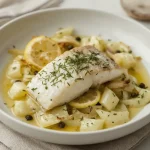
Firm, snowy-white sea bass fillets roasted skin-side up on a bed of sweet, caramelised fennel, then finished with a bright lemon, dill and caper butter. The skin crisps, the flesh stays silky and just-opaque, and the fennel soaks up every drop of the herb butter. It looks restaurant-plated but takes one tray and half an hour.
- Prep Time: 15
- Cook Time: 25
- Total Time: 40
- Yield: 4 1x
- Category: Main Course
- Method: Roasting
- Cuisine: British
Ingredients
- 2 medium fennel bulbs (about 1 lb / 450 g total), stalks trimmed, halved lengthwise and sliced 1/4 inch thick
- 2 tbsp extra-virgin olive oil
- 3/4 tsp fine sea salt, divided
- 1/2 tsp freshly ground black pepper, divided
- 6 tbsp (3 oz / 85 g) unsalted butter, softened at room temperature
- 2 tbsp fresh flat-leaf parsley, finely chopped
- 1 tbsp fresh dill fronds, finely chopped, plus extra sprigs to serve
- 1 garlic clove, finely grated
- 1 tsp finely grated lemon zest (from 1 lemon)
- 4 sea bass fillets, about 6 oz (170 g) each, skin on and pin-boned
- 1 lemon, half cut into thin rounds, half juiced (about 1 1/2 tbsp juice)
- 1 tbsp capers, drained and roughly chopped
- 1/4 tsp flaky sea salt, to finish
Instructions
- Position a rack in the middle of the oven and preheat to 400°F / 200°C (180°C fan). Line a large rimmed baking sheet, about 13 by 18 inches, with parchment paper — the fennel caramelises without welding itself to the pan, and cleanup takes seconds.
- Make the herb butter first so the flavours marry while the oven heats. Mash the softened butter in a small bowl with the parsley, dill, grated garlic, lemon zest, 1/4 tsp of the fine sea salt and 1/4 tsp of the pepper until you have an evenly flecked green paste. Leave it at room temperature; cold butter would tear the delicate fish skin.
- Trim the fennel: slice off the stalks flush with the bulb and cut a thin disc off the root end, then peel away any bruised outer layers. Stand each bulb on its flat base, halve it lengthwise, and slice each half crosswise into 1/4-inch thick pieces — thin enough to soften in fifteen minutes but sturdy enough to keep a little bite.
- Tip the fennel onto the lined sheet, drizzle over the olive oil and toss with your hands until every slice glistens. Scatter with the remaining 1/2 tsp fine sea salt and the last 1/4 tsp pepper, then spread into a single, even layer with no overlapping slices — piled-up fennel steams instead of browning.
- Roast the fennel for 15 minutes, until the edges are pale gold and the slices have slumped and softened. You should smell sweet aniseed when you open the oven door.
- While the fennel roasts, pat the sea bass fillets completely dry on both sides with paper towel, pressing firmly along the skin. Run your fingertips over the flesh to check for stray pin bones and pull any out with tweezers. Dry skin is the single biggest factor in a crisp, lacquered finish.
- Pull the tray from the oven and toss the fennel with a spatula to redistribute the browned edges. Push it into four rough mounds, each about the size of a fillet, spacing them evenly across the sheet. The fennel acts as a trivet so the fish never sits in its own juices.
- Lay one fillet on each fennel mound, skin-side up, and tuck the lemon rounds into the gaps between the mounds. Dot the fish with half of the herb butter, using about a teaspoon per fillet — the rest is for the sauce.
- Return the tray to the oven and roast for 10 to 12 minutes, until the flesh turns opaque and flakes into pearly chunks when nudged with a fork. The centre of the thickest fillet should register 145°F / 63°C on an instant-read thermometer — pull it out at that point, because it will keep cooking as it rests.
- Rest the tray on a heatproof surface for 2 to 3 minutes. This brief rest lets the muscle fibres relax so the juices stay in the fish rather than flooding the parchment when you lift it.
- While the fish rests, melt the remaining herb butter in a small saucepan over low heat with the capers and lemon juice. Swirl the pan constantly for 60 to 90 seconds until the butter is foaming, glossy and smells of lemon and dill — do not let it brown or the delicate herb flavour turns nutty and muddy.
- Spoon the warm caper butter over each fillet, scatter with dill sprigs and finish with the flaky sea salt. Serve immediately, with the roasted fennel alongside and lemon wedges if you like extra sharpness.
Notes
Sea bass is at its best straight from the oven, but leftovers keep in an airtight container in the fridge for up to 1 day — the flesh dries quickly beyond that. Reheat gently at 325°F / 165°C for 8 to 10 minutes, wrapped loosely in foil with a teaspoon of water to create steam; or flake it cold into a salad with the fennel and a squeeze of lemon. Avoid the microwave, which turns the skin rubbery. The herb butter freezes beautifully: roll it into a log in parchment and freeze for up to 2 months, slicing off coins as needed. Cooked sea bass does not freeze well, so only freeze the butter, not the finished dish. To scale up for a crowd, use two trays rather than crowding one — the fennel needs room to caramelise.
Nutrition
- Calories: 420
- Sugar: 5g
- Sodium: 760mg
- Unsaturated Fat: 12g
- Carbohydrates: 10g
- Fiber: 4g
- Protein: 33g
- Cholesterol: 150mg
Keywords: mary berry sea bass, sea bass recipe, roasted sea bass, baked sea bass fillets, sea bass with fennel, lemon butter fish, herb butter sea bass, British fish recipe, healthy fish dinner, weeknight seafood, oven roasted fish, sea bass fillet recipe