 Ekani Ella
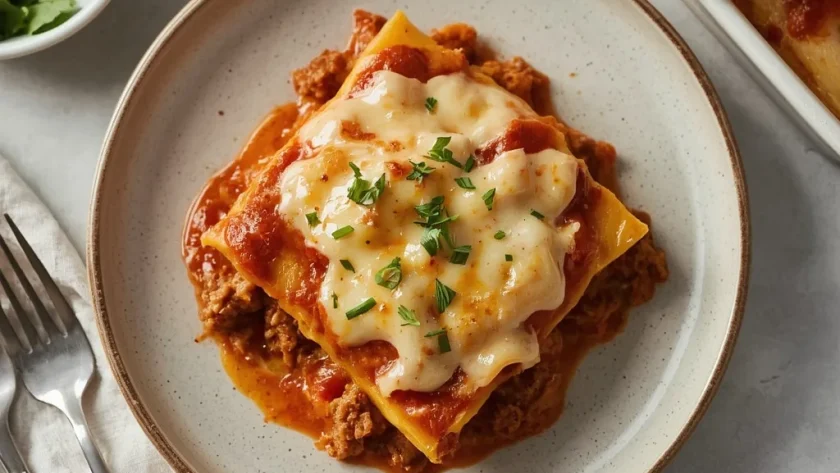
 Mary Berry Turkey Lasagne takes everything I love about a classic lasagne and makes it lighter without losing an ounce of comfort. This British-style bake layers lean ground turkey in a rich tomato sauce with creamy béchamel and tender pasta sheets, all topped with a golden, bubbly cheese crust.
You can have this hearty main course on the table in about 85 minutes total, and I would call it a confident intermediate recipe. The only step that needs a little attention is the béchamel — whisking constantly while adding the milk stops lumps from forming.
What is Mary Berry Turkey Lasagne?
This is a layered pasta bake built from three components: a soffritto-based turkey ragu, a nutmeg-scented white sauce, and no-boil lasagne sheets. The ground turkey gives you all the meaty satisfaction of beef with noticeably less fat. Each forkful delivers tender pasta, a lightly sweet tomato sauce, and a creamy, golden top that makes the whole dish feel special.
Why This Recipe is Worth Trying
- Leaner protein — Ground turkey (93% lean) cuts the fat content significantly while keeping the dish hearty and filling.
- No-boil noodles save time — You skip the pot of boiling water entirely. Just layer the sheets dry and they cook perfectly in the oven.
- Balanced, buildable flavours — The soffritto base adds sweetness and depth, while nutmeg in the béchamel brings warmth without stealing the show.
- Make-ahead friendly — Assemble the whole thing a day early, refrigerate, and bake when you need it. It actually tastes better after resting overnight.
- Freezes like a dream — An unbaked lasagne straight from the freezer bakes beautifully after thawing, making it a perfect emergency meal.
Essential Ingredients to Make Mary Berry Turkey Lasagne
Every ingredient here has a specific job. Here is what you need and why it matters.
The Meat Sauce Base
- 2 tablespoons olive oil — Used for sautéing the vegetables and starting the sauce. A good extra virgin gives more flavour, but regular works fine too.
- 1 large onion, finely diced — The foundation of the soffritto. Finely dicing it ensures it melts into the sauce as it cooks.
- 2 cloves garlic, minced — Adds a savoury punch. Fresh garlic is best here — the jarred stuff lacks the same kick.
- 1 medium carrot, finely diced — Provides natural sweetness that balances the acidity from the tomatoes.
- 1 celery stalk, finely diced — Adds an earthy, aromatic note that deepens the overall flavour of the ragu.
- 1 pound ground turkey (93% lean) — The protein that gives the lasagne its body. 93% lean keeps it moist without being greasy.
- 1 (14-ounce) can crushed tomatoes — Thicker than diced tomatoes, thinner than passata. Crushed tomatoes give the sauce a nice, rustic texture.
- 2 tablespoons tomato paste — Intensifies the tomato flavour and adds a deep red colour. Cook it for a minute with the meat before adding liquid.
- 1 teaspoon dried oregano — A classic Italian herb that pairs naturally with tomatoes and turkey.
- 1 teaspoon dried basil — Adds a slightly sweet, peppery note that brightens the finished sauce.
- 3/4 teaspoon kosher salt, divided — Half goes into the meat sauce, the remaining quarter seasons the béchamel. This prevents either layer from tasting flat.
- 1/4 teaspoon black pepper, plus more to taste — A modest amount in the sauce; you can always add more at the end after tasting.
The Béchamel Layer
- 2 tablespoons unsalted butter — The fat base for the roux. Unsalted gives you full control over the salt level of the white sauce.
- 2 tablespoons all-purpose flour — Thickens the milk into a smooth, pourable sauce. Standard plain flour works perfectly here.
- 2 cups whole milk — Full-fat milk makes a richer, creamier béchamel. Semi-skimmed will work but the texture will be noticeably thinner.
- 1/4 teaspoon freshly grated nutmeg — A small amount goes a long way. Freshly grated nutmeg is infinitely more fragrant than pre-ground.
The Pasta and Topping
- 8 to 9 no-boil lasagne sheets (about 8 ounces) — These cook directly in the sauce during baking. Break them to fit your dish, but keep overlaps under 1/4 inch.
- 1 cup shredded low-moisture mozzarella (4 ounces) — Low-moisture melts into a gooey, stretchy layer without releasing excess water and making the lasagne soggy.
- 1/2 cup grated Parmesan cheese (2 ounces) — Adds a salty, nutty crust that contrasts beautifully with the creamy béchamel beneath it.
Handy Kitchen Tools for Best Results
- Large skillet or Dutch oven — You need a wide, deep pan to brown the turkey and simmer the sauce. A Dutch oven holds heat evenly and reduces splattering.
- Medium saucepan — Dedicated to the béchamel. A heavy-bottomed pan prevents the milk from scorching on the bottom.
- 9-by-13-inch baking dish — The standard size for a generous 4-serving lasagne. Glass or ceramic works best — metal can react with the tomatoes and give a slight metallic taste.
- Wooden spoon or spatula — Breaks up the ground turkey while scraping up any browned bits from the bottom of the pan.
- Whisk — Indispensable for a lump-free béchamel. A balloon whisk reaches into the corners of the saucepan better than a flat whisk.
Step-by-Step Guide to Making Mary Berry Turkey Lasagne
Here is how the whole process comes together. Take each step in order and you will have a lasagne that holds its shape and tastes fantastic.
- Build the soffritto — Heat the olive oil in a large skillet over medium-high heat. Add the onion, garlic, carrot, and celery and cook until softened and lightly browned, about 6 to 8 minutes. This aromatic base adds sweetness and depth to the entire dish.
- Brown the turkey — Add the ground turkey to the skillet and break it apart with a wooden spoon. Cook until no longer pink, about 5 to 7 minutes. Avoid over-stirring — letting the meat sit in contact with the pan gives you better browning.
- Simmer the sauce — Stir in the crushed tomatoes, tomato paste, oregano, basil, 1/2 teaspoon salt, and black pepper. Reduce the heat to low and simmer uncovered for 15 minutes, stirring occasionally, until the sauce thickens. Taste and adjust seasoning before setting aside.
- Make the béchamel — In a medium saucepan, melt the butter over medium heat. Whisk in the flour and cook for 1 minute, stirring constantly, until smooth and pale golden. This step eliminates the raw flour taste.
- Finish the white sauce — Gradually pour in the milk while whisking constantly to prevent lumps. Keep whisking until the sauce thickens enough to coat the back of a spoon, about 3 to 4 minutes. Remove from heat and stir in the nutmeg and the remaining 1/4 teaspoon salt.
- Layer the lasagne — Spread a thin layer of meat sauce (about 1/2 cup) over the bottom of a 9-by-13-inch baking dish. Add a layer of lasagne sheets, then spread one-third of the remaining meat sauce over the pasta, followed by one-third of the béchamel. Repeat twice more, ending with a final layer of béchamel on top.
- Top with cheese — Sprinkle the shredded mozzarella evenly over the top, then the grated Parmesan. The mozzarella melts into a gooey layer while the Parmesan creates a salty, golden crust that holds everything together.
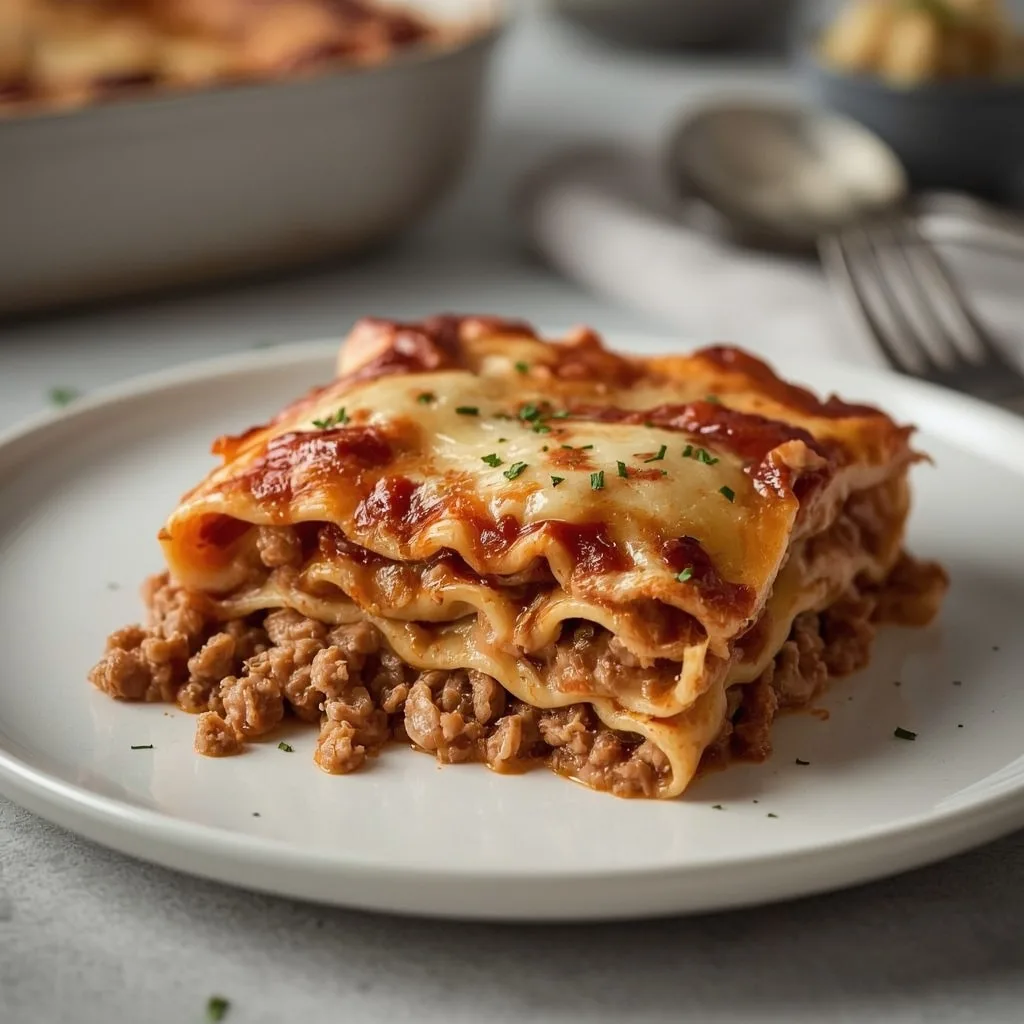
- Bake and rest — Place the dish on a baking sheet and bake uncovered at 375°F / 190°C for 30 minutes. The top should be bubbling and deep golden brown. Let the lasagne rest on a wire rack for at least 10 minutes before slicing. This rest is essential — it lets the layers set so they hold their shape on the plate.
What I Got Wrong (And How I Fixed It)
- Overlapping the pasta sheets — I used to overlap the no-boil sheets by a good half inch. The middle stayed chewy and undercooked. Now I keep overlaps under 1/4 inch, and every sheet cooks through evenly.
- Skipping the soffritto — The first time I made this, I sautéed only the onion and garlic. The sauce tasted flat and one-dimensional. Adding finely diced carrot and celery transformed the base into something rich and sweet. Do not skip these vegetables.
- Pouring the milk too fast — I added the milk all at once to the roux and ended up with a lumpy, unappealing béchamel. Pouring it in a slow, steady stream while whisking constantly gives you a silky smooth sauce every time.
- Cutting into the lasagne too soon — I was impatient and sliced it after about 4 minutes of resting. The layers slid apart into a messy pile. A solid 10-minute rest on a wire rack makes an enormous difference — the lasagne holds its shape beautifully after that wait.
- Using pre-shredded mozzarella — Bagged mozzarella contains anti-caking agents that prevent it from melting into a smooth, stretchy layer. Grating it yourself from a block takes two minutes and gives you a far superior texture.
Healthier Version of Mary Berry Turkey Lasagne
- Swap whole milk for 2% — Using 2% milk instead of whole reduces the fat in the béchamel by roughly 30%. The sauce will be slightly thinner but still plenty creamy.
- Reduce the cheese by half — Cutting the mozzarella to 1/2 cup and the Parmesan to 1/4 cup shaves off about 100 calories and 8 grams of fat per serving. The top will still brown nicely.
- Add extra vegetables — Sauté a small diced zucchini or a handful of chopped spinach along with the soffritto. The extra fibre and moisture bulk up the dish without adding many calories.
- Use whole-wheat lasagne sheets — Whole-wheat no-boil noodles add a generous 3 grams of fibre per serving and have a nutty flavour that works well with the turkey and herbs.
Ingredient Substitutions for Mary Berry Turkey Lasagne
- Ground turkey (1 pound) → Ground chicken or lean ground beef (1 pound) — Ground chicken behaves almost identically to turkey. Lean ground beef (90/10) adds a richer flavour but a similar fat content. No other adjustments needed.
- Crushed tomatoes (14 ounces) → Passata (14 ounces) — Passata is smoother and slightly thicker than crushed tomatoes. Your sauce will be silkier, but the flavour remains the same.
- Dried oregano and basil (1 teaspoon each) → 1 tablespoon fresh oregano and basil, chopped — Fresh herbs have a milder flavour, so you need three times the volume. Add them after simmering to keep their brightness.
- No-boil lasagne sheets (8 to 9 sheets) → Regular lasagne sheets, boiled (8 to 9 sheets) — If you use regular sheets, boil them until al dente, drain well, and pat dry before layering. Reduce the baking time by 5 to 7 minutes to avoid overcooked pasta.
- Whole milk (2 cups) → Unsweetened oat milk (2 cups) — Oat milk has a creamy consistency close to dairy milk. The béchamel will be slightly less rich but still smooth and velvety.
- Kosher salt (3/4 teaspoon) → Sea salt (3/4 teaspoon) — Sea salt has a similar crystalline structure to kosher salt, so you can swap it measure for measure without adjusting the quantity.
Pairing Ideas: What to Serve With Mary Berry Turkey Lasagne
A single dish of lasagne is filling, but the right sides make it a proper meal. Here are a few I keep coming back to.
- Simple green salad with lemon vinaigrette — The bright, acidic dressing cuts through the richness of the béchamel and cheese, keeping every bite balanced.
- Garlic bread with parsley — Crispy, buttery bread is perfect for sopping up any extra sauce left on the plate. Tossing fresh parsley into the garlic butter adds a fresh note.
- Roasted broccoli or asparagus — Toss the spears with olive oil and salt, then roast at 400°F / 200°C for 15 minutes. The charred edges contrast nicely with the soft lasagne.
- This dish stands well on its own for a weeknight dinner — a side is optional but welcome if you want extra greens.
- A glass of medium-bodied red wine — A Chianti or a Sangiovese has enough acidity to stand up to the tomato sauce without overwhelming the turkey.
Expert Tips to Make Perfect Mary Berry Turkey Lasagne
- Brown the turkey in batches — If your skillet is crowded, the meat will steam instead of browning. Cook the turkey in two batches if needed, then combine them with the soffritto before adding the tomatoes.
- Season each layer separately — Tasting only the finished dish makes it hard to fix bland spots. Season the meat sauce and béchamel individually, then trust that the final combination will be perfectly balanced.
- Let the béchamel rest covered — After making the white sauce, press a layer of cling film directly onto the surface or keep the pan covered with a lid. This stops a skin from forming while you finish the meat sauce.
- Use a piping bag for the béchamel — If you have a piping bag (or a zip-top bag with a corner snipped off), pipe the béchamel in an even layer over the pasta. This distributes it more evenly than spooning and spreading.
- Press down gently after layering — After adding each layer of pasta sheets, press down lightly with your hands or a spatula. This removes air pockets and helps the sheets sit flat against the sauce.
- Check for doneness with a knife — Insert a thin knife into the centre of the lasagne after 25 minutes of baking. If it slides through the pasta with little resistance, the lasagne is ready. If you feel resistance, bake for another 5 minutes and test again.
Creative Ways to Customize Mary Berry Turkey Lasagne
- Add a layer of wilted spinach — Sauté 5 ounces of fresh spinach with a clove of garlic until wilted, then squeeze out the excess moisture. Spread it over the first layer of pasta for a nutrient boost and a beautiful green contrast.
- Swap the béchamel for ricotta — Mix 2 cups of whole-milk ricotta with 1 egg, 1/4 cup grated Parmesan, a pinch of nutmeg, and salt. Use this mixture in place of the béchamel for a lighter, cheesier lasagne.
- Add a hint of spice — Stir 1/2 teaspoon of red pepper flakes into the meat sauce along with the dried herbs. A gentle heat builds as you eat without overpowering the turkey.
- Include sautéed mushrooms — Sauté 8 ounces of sliced cremini mushrooms in butter until golden and tender, then stir them into the meat sauce. Mushrooms add an umami depth that complements the turkey beautifully.
- Make it gluten-free — Use gluten-free no-boil lasagne sheets and replace the all-purpose flour in the béchamel with a gluten-free all-purpose blend. The texture stays surprisingly close to the original.
Storing Mary Berry Turkey Lasagne the Right Way
- Refrigerator (baked) — Transfer leftover lasagne to an airtight container or cover the baking dish tightly with foil or a lid. It keeps well for up to 4 days. The flavours actually meld and improve on the second day.
- Freezer (unbaked) — Assemble the lasagne completely in a freezer-safe dish but do not bake. Cover tightly with a layer of cling film, then a layer of foil, and freeze for up to 3 months. Label the dish with the date so you remember.
- Freezer (baked) — Bake the lasagne fully, let it cool completely, then wrap the entire dish in a double layer of foil. Freeze for up to 2 months. Thaw overnight in the fridge before reheating.
- Individual portions — Cut cooled lasagne into single-serving squares, wrap each one tightly in foil, and store them in a freezer bag. This makes grabbing a quick lunch as simple as pulling out one square and reheating it.
How to Reheat Mary Berry Turkey Lasagne (If Needed)
- Oven method — Place a portion on an oven-safe plate or in a small dish, cover loosely with foil, and reheat at 350°F / 175°C for 15 minutes. This restores the crisp edges and melty cheese better than the microwave.
- Microwave method — Place a slice on a microwave-safe plate and cover with a damp paper towel. Microwave on high in 30-second bursts until hot throughout, about 2 minutes total. The steam from the damp towel prevents the pasta from drying out.
- Air fryer method — Place a slice in an air-fryer basket lined with foil and reheat at 350°F / 175°C for 6 to 8 minutes. The circulating air crisps up the top while keeping the inside moist.
Nutritional Breakdown (per serving)
Based on 1 serving = 1 quarter of the full lasagne.
- Calories: 580
- Protein: 40g
- Fat: 30g
- Carbohydrates: 40g
- Fiber: 2g
- Sugar: about 10g
- Sodium: 800mg
FAQs
Can I freeze Mary Berry Turkey Lasagne?
Yes, you absolutely can. Assemble the lasagne completely in a freezer-safe dish without baking it, wrap it tightly with foil, and freeze for up to 3 months. Thaw overnight in the refrigerator, then bake as directed, adding 10 to 15 minutes to the baking time.
How long does Mary Berry Turkey Lasagne last in the fridge?
Baked lasagne keeps well in an airtight container in the refrigerator for up to 4 days. The flavours actually deepen and improve after the first day or two, making leftovers something to look forward to.
Can I use regular lasagne sheets instead of no-boil?
Yes. Boil regular lasagne sheets until al dente, drain them well, and pat them dry before layering. Because the sheets are already cooked, you can reduce the baking time by about 5 minutes. Watch the top carefully to prevent over-browning.
Why is my béchamel sauce lumpy?
Lumps form when you add the milk too quickly to the roux. Next time, pour the milk in a slow, steady stream while whisking constantly. If you still end up with lumps, strain the finished sauce through a fine-mesh sieve before layering — it works perfectly.
Is ground turkey dry in lasagne?
Not if you use 93% lean turkey. The higher fat content keeps the meat moist during cooking. You also simmer the turkey in a tomato sauce for 15 minutes, which adds moisture and prevents it from drying out in the oven.
Can I add more vegetables to the sauce?
Absolutely. Finely diced zucchini, bell pepper, or a handful of chopped spinach can be sautéed with the soffritto. Just make sure to squeeze any excess moisture from the vegetables before adding them to the sauce, or the lasagne may turn watery.
Try These Recipes
Wrapping It Up
Mary Berry Turkey Lasagne is the kind of recipe I turn to when I want something hearty but a little lighter than the original. The turkey keeps it leaner, but the soffritto, béchamel, and cheese topping make sure no one feels shortchanged on flavour or comfort. Give it a try — I think you will find it becomes a regular in your kitchen too.
PrintMary Berry Turkey Lasagne
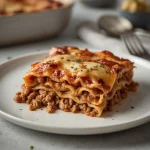
A comforting British-style lasagne featuring lean ground turkey in a rich tomato sauce, layered with creamy béchamel and tender pasta sheets. Baked until golden and bubbly, this hearty main course offers a lighter alternative to traditional beef lasagne without sacrificing flavor or texture.
- Prep Time: 30
- Cook Time: 55
- Total Time: 85
- Yield: 4 1x
- Category: Main Course
- Method: Baking
- Cuisine: British
Ingredients
- 2 tablespoons olive oil
- 1 large onion, finely diced
- 2 cloves garlic, minced
- 1 medium carrot, finely diced
- 1 celery stalk, finely diced
- 1 pound ground turkey (93% lean)
- 1 (14-ounce) can crushed tomatoes
- 2 tablespoons tomato paste
- 1 teaspoon dried oregano
- 1 teaspoon dried basil
- 3/4 teaspoon kosher salt, divided
- 1/4 teaspoon black pepper, plus more to taste
- 2 tablespoons unsalted butter
- 2 tablespoons all-purpose flour
- 2 cups whole milk
- 1/4 teaspoon freshly grated nutmeg
- 8 to 9 no-boil lasagne sheets (about 8 ounces)
- 1 cup shredded low-moisture mozzarella (4 ounces)
- 1/2 cup grated Parmesan cheese (2 ounces)
Instructions
- Heat the olive oil in a large skillet or Dutch oven over medium-high heat until shimmering. Add the onion, garlic, carrot, and celery and cook, stirring occasionally, until softened and lightly browned, about 6 to 8 minutes. This soffritto forms the aromatic base of the sauce, adding sweetness and depth.
- Add the ground turkey to the skillet. Break it apart with a wooden spoon and cook until no longer pink, about 5 to 7 minutes. Do not over-stir; allow the meat to brown slightly for better flavor. Drain off any excess fat if needed.
- Stir in the crushed tomatoes, tomato paste, oregano, basil, 1/2 teaspoon of the salt, and the black pepper. Reduce heat to low and simmer the sauce uncovered for 15 minutes, stirring occasionally, until thickened. Taste and adjust seasoning with additional salt and pepper. Set aside.
- While the sauce simmers, prepare the béchamel. In a medium saucepan, melt the butter over medium heat. Whisk in the flour and cook for 1 minute, stirring constantly, until the mixture is smooth and pale golden. This roux eliminates the raw flour taste.
- Gradually pour in the milk while whisking constantly to prevent lumps. Continue whisking until the sauce thickens enough to coat the back of a spoon, about 3 to 4 minutes. Remove from heat and stir in the nutmeg and remaining 1/4 teaspoon salt. Season with a pinch of pepper. Cover and set aside.
- Preheat the oven to 375°F / 190°C. Spread a thin layer of the meat sauce (about 1/2 cup) over the bottom of a 9-by-13-inch baking dish. This prevents the lasagne sheets from sticking and adds moisture to the base.
- Place a layer of lasagne sheets over the sauce, breaking pieces to fit as needed. Avoid overlapping more than 1/4 inch to ensure even cooking. Spread one-third of the remaining meat sauce over the pasta, then dollop and spread one-third of the béchamel on top.
- Repeat the layering: pasta, meat sauce, béchamel, for two more layers, ending with a final layer of béchamel. Do not top with meat sauce at the end—the béchamel on top creates a creamy, golden crust.
- Sprinkle the shredded mozzarella evenly over the top, followed by the grated Parmesan. The Parmesan adds a salty, nutty crust while the mozzarella melts into a gooey, stretchy layer that holds the lasagne together.
- Place the dish on a baking sheet to catch any drips and bake uncovered for 30 minutes. The top should be bubbling and deep golden brown. If the cheese browns too quickly, tent loosely with foil after 20 minutes.
- Let the lasagne rest on a wire rack for at least 10 minutes before slicing. This allows the layers to set so the lasagne holds its shape when served. Cutting too early will cause it to slide apart. Serve warm.
Notes
Store leftovers in an airtight container in the refrigerator for up to 4 days. To reheat, place a portion on a microwave-safe plate and cover with a damp paper towel; microwave on high in 30-second bursts until hot, about 2 minutes total. For crispier edges, reheat in a 350°F / 175°C oven for 15 minutes. To freeze, assemble the lasagne completely in a freezer-safe dish but do not bake. Cover tightly with foil and freeze for up to 3 months. Thaw overnight in the refrigerator, then bake as directed, adding 10 to 15 minutes to the baking time.
Nutrition
- Calories: 580
- Sugar: 10g
- Sodium: 800mg
- Unsaturated Fat: 12g
- Carbohydrates: 40g
- Fiber: 2g
- Protein: 40g
- Cholesterol: 120mg
Keywords: Mary Berry turkey lasagne, turkey lasagne recipe, British lasagne, ground turkey pasta bake, creamy turkey lasagne, easy weeknight lasagne, no-boil lasagne, turkey béchamel bake, lasagne al forno, comfort food dinner