 Ekani Ella
This Mary Berry Battenberg Cake Recipe turns two thin almond sponges — one plain, one pastel pink — into a checkerboard teatime cake wrapped in soft marzipan. Apricot jam does the glueing, and the almond flavour carries through every layer. Nothing here is complicated, but the finish rewards a careful hand.
Total time runs 140 minutes, though most of that is cooling and chilling rather than active work. It lands at intermediate level: the sponges are straightforward, while rolling the marzipan neatly around four logs takes practice the first time. Best saved for a weekend bake or an afternoon tea where you want something that looks far harder than it is.
What is Mary Berry Battenberg Cake Recipe?
Two small almond sponges are baked side by side in one divided tin, then trimmed into four equal strips and joined with warm apricot jam into a chequerboard. Marzipan is rolled thin, wrapped around the whole block, and the cake is chilled before slicing. The crumb stays tender and light, with a soft almond sweetness against the tang of apricot. Slices should look neat and evenly squared, which is why the trimming step matters so much.
Why This Recipe is Worth Trying
- Visual payoff — a clean checkerboard cross-section looks like a bakery window piece, and you get it from a plain home oven.
- Short ingredient list — thirteen items, most of them fridge and cupboard staples you probably already own.
- Two sponges, one tin — the baking paper divider means no separate tins and no staggered baking.
- Make-ahead friendly — the assembled cake firms up in the fridge, so you can build it the day before serving.
- Forgiving finish — marzipan hides small trimming mistakes far better than buttercream would.
Essential Ingredients to Make Mary Berry Battenberg Cake Recipe
Everything below is standard British baking stock, and the only item worth a special trip is the marzipan.
For Greasing and Dusting
- 1 tsp unsalted butter, softened — for greasing the tin; the baking paper does most of the work, but a thin smear stops it sliding.
- 1 tbsp plain flour — knocks down any residual stickiness after greasing; tap out the excess or you get pale streaks on the crust.
The Dry Base
- 95g self-raising flour — the only leavening in the recipe, so check the use-by date; flat flour makes flat sponges.
- 25g ground almonds — brings moisture and the nutty backbone; almond meal works the same way.
- 1/8 tsp fine sea salt — a small pinch sharpens the almond flavour without tasting salty.
The Sponge Batter
- 115g unsalted butter, softened — needs to be genuinely soft, not melted, or the creaming stage fails.
- 100g caster sugar — caster sugar dissolves slightly faster if you have it, but either works.
- 2 large eggs, at room temperature — cold eggs split the batter; sit them in warm water for ten minutes if you forgot.
- 1/4 tsp almond extract — stronger than you expect, so measure it properly rather than pouring by eye.
- 1/8 tsp pink gel food colouring — gel, not liquid, so the batter doesn’t loosen; add in tiny dabs.
To Assemble
- 80g apricot jam — warmed and sieved, it becomes the glue between logs and under the marzipan.
- 200g ready-made marzipan, at room temperature — cold marzipan cracks on rolling; leave it out of the fridge for an hour first.
- 1 tbsp icing sugar — dusts the work surface and finishes the top after chilling.
Handy Kitchen Tools for Best Results
None of this is specialist kit, but a couple of items make the difference between neat and messy.
- 20 x 15cm rectangular baking tin — the exact size matters, because the mixture is split between two 10 x 15cm sections.
- Baking paper and a divider — a folded strip set lengthwise keeps the pink and plain batters completely separate.
- Serrated knife — a long bread knife slices sponge cleanly without squashing and trims the marzipan ends without tearing.
- Small offset spatula — levels the batter in each compartment so both strips bake to the same height.
- Rolling pin and a clean ruler — a ruler keeps the marzipan at 20 x 18cm and 3mm thick, which is what prevents bulges.
Step-by-Step Guide to Making Mary Berry Battenberg Cake Recipe
Work through these in order — the trimming and assembly stages depend on fully cooled sponges.
- Heat the oven — preheat to 180°C/160°C fan/gas 4. Grease the 20 x 15cm tin with the teaspoon of butter, line the base and sides with baking paper, and set a baking paper divider lengthways down the centre. Dust with the tablespoon of flour and tap out the excess.
- Combine the dry ingredients — whisk 95g self-raising flour, 25g ground almonds and a pinch of salt in a medium bowl until the almonds are evenly spread.
- Cream butter and sugar — beat 115g softened butter with 100g caster sugar on medium-high for 3 to 4 minutes until pale and fluffy, scraping down halfway.
- Add the eggs — beat in 2 eggs one at a time, about 30 seconds each, scraping between. If the mix looks curdled, stir in a tablespoon of the flour blend.
- Fold in almond extract and dry mix — add 1/4 tsp almond extract, then fold in the dry ingredients in two additions. Stop the moment there are no dry streaks.
- Colour half the batter — divide between two bowls. Colour one with a tiny amount of pink gel colouring, a little at a time, until evenly pale pink.
- Fill the compartments — spoon the plain mixture into one side and the pink into the other, level the tops, then lift the tin 5cm and drop it twice.
- Bake — 20 to 25 minutes, until the centres spring back and a skewer comes out clean. Rotate halfway if your oven browns unevenly, but keep the door shut for the first 15 minutes.
- Cool and trim — leave in the tin for 5 minutes, turn out onto a wire rack, peel off the baking paper and cool fully for about 45 minutes. Trim each sponge to about 13 x 9cm, then cut in half lengthways into two 4.5cm strips, for four in total.
- Warm the jam — heat 80g apricot jam gently over a low heat until runny and glossy, stirring often. Sieve out lumps and add 1 tsp water if it’s very thick.
- Roll the marzipan — on a surface dusted with icing sugar, roll 200g marzipan into a 20 x 18cm rectangle, 3mm thick. Brush the long sides of all four strips with jam and press them together alternately: pink, plain, pink, plain.
- Wrap and chill — brush the outside of the assembled block with jam, sit it on the marzipan, trim leaving a 2.5cm overlap, roll tightly and press the join closed. Trim the ends, wrap in baking paper and chill for 30 minutes before dusting and slicing.
What I Got Wrong (And How I Fixed It)
These are the stumbles that show up most often, mine included.
- Skipping the level trim — uneven logs give a lopsided checkerboard. Use a ruler and a serrated knife, and cut slowly rather than sawing.
- Rolling cold marzipan — straight from the fridge it splits along the edge. An hour at room temperature makes it pliable enough to stretch around corners.
- Overmixing the batter — beating past the point of combined knocks out air and gives a tight, heavy crumb. Fold, then stop.
- Opening the oven early — a draft in the first 15 minutes collapses the rise. Use the oven light instead of the door.
- Undercolouring the pink — too little gel reads as beige next to the plain sponge. Build the colour in small dabs and check against the plain batter.
- Slicing while warm — the marzipan drags and the layers shift. Thirty minutes in the fridge sets everything before the knife goes in.
Healthier Version of Mary Berry Battenberg Cake Recipe
This is a treat, not a health food, but a few swaps lighten it without wrecking the texture.
- Reduce the sugar — drop the caster sugar to 70g; the sponge stays tender because the ground almonds hold moisture.
- Swap half the flour — replace 30g of the self-raising flour with wholemeal self-raising for extra fibre, though the crumb turns slightly nuttier.
- Use a lighter filling — mix 80g apricot jam with 1 tbsp lemon juice to stretch it further with less sugar per slice.
- Trim the marzipan thinner — roll it a little thinner than 3mm; you keep the almond flavour while cutting sugar and calories.
- Serve smaller slices — cut eight portions instead of four, which halves everything on the nutrition panel.
Ingredient Substitutions for Mary Berry Battenberg Cake Recipe
Most of these work without adjusting the method, but watch the flour and colouring swaps closely.
- 95g self-raising flour → 95g plain flour + 1½ tsp baking powder — whisk together before adding; the rise comes out the same.
- 25g ground almonds → 25g ground hazelnuts — a slightly deeper, toastier flavour; keep the amount identical.
- 1/4 tsp almond extract → 1/2 tsp vanilla extract — milder and sweeter; the almond note will be fainter but still present from the ground nuts.
- 80g apricot jam → 80g seedless raspberry jam — sharper against the marzipan; sieve it if it has pips.
- 1/8 tsp pink gel colouring → 1/8 tsp beetroot powder — natural but less predictable, so start with a pinch and build up.
- 200g marzipan → 200g ready-to-roll white icing — a sweeter, softer coating; chill the cake longer so the fondant firms before slicing.
Pairing Ideas: What to Serve With Mary Berry Battenberg Cake Recipe
Slices are sweet and almond-heavy, so balance them with something plain or sharp.
- Strong breakfast tea — tannin cuts through the marzipan better than anything else on the table.
- Fresh raspberries — a small handful per plate adds acidity and stops the cake feeling cloying.
- Creme fraiche — a cool, lightly tart spoonful alongside each slice works where cream would be too rich.
- Lemon posset — a sharp chilled dessert served after, echoing the same teatime mood.
- Iced coffee — the bitterness plays well against sweet almond and apricot.
- Thin buttered brown bread — a savoury course first, in proper afternoon tea order.
Expert Tips to Make Perfect Mary Berry Battenberg Cake Recipe
Small details in the assembly stage decide whether the checkerboard reads cleanly.
- Weigh the batter, don’t eyeball it — split it into two bowls on the scales so both sponges bake to identical heights.
- Chill the logs before joining — 10 minutes in the fridge firms the jam and stops the strips sliding out of line.
- Brush jam on the marzipan seam too — a thin line along the overlap edge helps it seal flat instead of lifting.
- Rotate as you roll — quarter-turn the block every few centimetres so the marzipan stretches evenly and doesn’t thin at one end.
- Trim the ends at an angle — a slight diagonal cut shows the checkerboard more clearly than a flat slice.
- Keep the icing sugar light — dust just before serving; a heavy coating dulls the marzipan’s soft sheen.
- Use a warm knife — dip the blade in hot water and dry it between cuts for clean, sharp edges.
Creative Ways to Customize Mary Berry Battenberg Cake Recipe
The format is flexible — change the colour, the flavour or the coating and the checkerboard still works.
- Lemon and raspberry — swap the almond extract for lemon zest and tint the second sponge a soft yellow-green.
- Pistachio version — replace ground almonds with ground pistachios and tint both sponges pale green.
- Chocolate coating — brush the outside with warm jam and press finely chopped nuts instead of wrapping in marzipan.
- Three-colour panel — divide the batter into three and bake in three narrow compartments for a striped interior.
- Coffee sponge — dissolve 1 tsp instant coffee in the eggs and leave out the almond extract for a tiramisu-style twist.
- Festive tint — colour the second sponge deep red at Christmas and dust with icing sugar for a snowy top.
Storing Mary Berry Battenberg Cake Recipe the Right Way
Marzipan needs air kept away but stays softer at room temperature than in the fridge.
- Baking paper and an airtight tin — wrap the cake tightly in baking paper, then put it in a tin; at room temperature it keeps well for up to 2 days.
- Fridge — the same wrapping keeps it up to 5 days; bring it out 20 minutes before serving so the marzipan softens.
- Freezer slices — wrap individual pieces tightly and freeze up to 1 month, then defrost at room temperature for about an hour.
- Never refrigerate uncovered — the marzipan dries and cracks along the seam within a few hours.
- Keep it away from strong smells — almond picks up other flavours fast, so store it apart from onions and spices.
How to Reheat Mary Berry Battenberg Cake Recipe (If Needed)
This is a cold cake by design, though a brief warm-up brings back the almond aroma.
- Room-temperature rest — 20 minutes at room temperature is all a chilled slice needs; the sponge and marzipan soften together.
- Low oven — 150°C/130°C fan/gas 2 for 6 to 8 minutes on a lined tray brings back a freshly baked smell; watch that the marzipan softens rather than melts.
- Air fryer — 150°C for 3 to 4 minutes works for single slices, but check at 2 minutes since the top browns fast.
- Microwave — skip it — the marzipan turns sticky and gluey within seconds, so leave this one alone.
Nutritional Breakdown (per serving)
Based on 1 serving = 1 thick slice out of 4 total.
- Calories — 754
- Protein — 11g
- Fat — 40g
- Carbohydrates — 91g
- Fibre — 2g
- Sugar — 66g
- Sodium — about 246mg
FAQs
Can I make Mary Berry Battenberg Cake Recipe ahead of time?
Yes, and it’s easier that way. Bake and trim the sponges a day ahead, store them wrapped at room temperature, then assemble and chill the finished cake the morning you plan to serve it.
Can I freeze Mary Berry Battenberg Cake Recipe?
Individual slices freeze well for up to 1 month. Wrap each one tightly in baking paper and then foil, and defrost at room temperature for about an hour before eating. Freezing the whole cake works too, though the marzipan can weep slightly as it defrosts.
Why did my marzipan crack while rolling?
Almost always temperature. Cold marzipan has no stretch, so leave it out of the fridge for an hour. If it still splits, press the tear back together gently with warm fingers and dust lightly with icing sugar.
Can I bake the sponges in two separate tins?
Absolutely. Two 10 x 15cm tins, or one loaf tin divided with baking paper, both work. The point is keeping the mixtures apart so the colours don’t run together before they set.
How do I get an even checkerboard?
Trim all four strips to identical sizes with a ruler before joining them. Measure twice, cut once — even a 5mm difference shows up clearly when you slice it.
What if my sponges dome in the middle?
Slice the domed top off once the sponge is completely cool. A flat top is what makes the logs sit level against each other, so don’t skip this trim.
Try These Recipes
Wrapping It Up
Two small sponges, a jar of jam and a block of marzipan — that’s the whole trick behind a cake that looks like it came from a bakery window. Take your time over the trimming and chilling stages and the rest falls into place.
Give this Mary Berry Battenberg Cake Recipe a go for your next afternoon tea and slice it while it’s still cool and firm. The checkerboard does the impressing for you.
PrintMary Berry Battenberg Cake Recipe
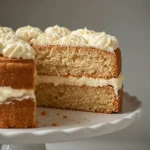
This classic British Battenberg cake is made from two light almond sponges, one pale and one pastel pink, joined with apricot jam and wrapped in soft marzipan. Each slice reveals a neat chequerboard pattern, with a tender crumb and a sweet almond and apricot finish. It is a teatime showpiece that is simpler to make than it looks.
- Prep Time: 40
- Cook Time: 25
- Total Time: 140
- Yield: 4 1x
- Category: Dessert
- Method: Baking
- Cuisine: British
Ingredients
- 1 tsp unsalted butter, softened, for greasing
- 1 tbsp plain flour, for dusting
- 95g self-raising flour
- 25g ground almonds
- Pinch of fine sea salt
- 115g unsalted butter, softened
- 100g caster sugar
- 2 large eggs, at room temperature
- ¼ tsp almond extract
- Pink gel food colouring, a tiny amount for pale pink
- 80g apricot jam
- 200g ready-made marzipan, at room temperature
- 1 tbsp icing sugar, for dusting
Instructions
- Preheat the oven to 180°C/160°C fan/gas 4. Grease a 20 x 15cm rectangular tin with the softened butter, line the base and sides with baking paper, and make a baking paper divider down the centre to create two 10 x 15cm sections. Dust the tin with the plain flour and tap out the excess so the sponges come out cleanly.
- In a medium bowl, whisk together the self-raising flour, ground almonds and salt until evenly combined. Set aside.
- In a large bowl, or a stand mixer, beat the softened butter and caster sugar on medium-high speed for 3–4 minutes, until pale, light and fluffy. Scrape down the bowl halfway through.
- Beat in the eggs one at a time, mixing for about 30 seconds after each and scraping the bowl in between. If the mixture looks slightly curdled, stir in 1 tbsp of the flour mixture to bring it back together.
- Add the almond extract, then fold in the dry ingredients in two goes on low speed or with a spatula. Stop as soon as the mixture is just combined with no dry streaks; overmixing makes the sponges dense.
- Divide the mixture evenly between two bowls. Colour one bowl with a tiny amount of pink gel food colouring, adding it bit by bit until the colour is an even pale pink; leave the second bowl plain.
- Spoon the plain mixture into one section of the tin and the pink mixture into the other, levelling the tops. Lift the tin about 5cm above the work surface and drop it twice to release large air pockets.
- Bake for 20–25 minutes, until the sponges spring back when lightly pressed in the centre and a skewer pushed into the middle comes out clean. Turn the tin halfway through if your oven browns unevenly, but do not open the oven during the first 15 minutes.
- Cool the sponges in the tin for 5 minutes, then turn them out onto a wire rack, peel off the baking paper and cool completely, about 45 minutes. Trim the cooled sponges with a serrated knife so each one measures about 13 x 9cm, then cut each one in half lengthways into two 4.5cm-wide strips, to make four strips in total.
- Warm the apricot jam in a small pan over a low heat until runny and glossy, stirring often; press it through a fine sieve if it has lumps. If it is very thick, stir in 1 tsp water, then keep warm for brushing.
- On a clean surface lightly dusted with icing sugar, roll the marzipan into a rectangle about 20 x 18cm and 3mm thick. Brush the long sides of all four sponge strips lightly with warm jam, then press them together in a chequerboard: pink next to plain, plain next to pink.
- Brush the outside of the assembled cake with warm jam, place it on the marzipan, and trim the marzipan so it wraps around with about a 2.5cm overlap. Roll up tightly, press the join closed, trim the ends neatly, wrap in baking paper and chill for 30 minutes before dusting with the remaining icing sugar and slicing with a serrated knife.
Notes
Keep the finished cake wrapped in baking paper in an airtight tin at room temperature for up to 2 days, or in the fridge for up to 5 days; bring it to room temperature for 20 minutes before serving. To freeze, wrap individual slices tightly and freeze for up to 1 month, then defrost at room temperature for about 1 hour. Do not microwave the marzipan-covered cake, as it will go sticky. If the marzipan cracks while rolling, press it back together gently, and if it feels sticky, dust lightly with icing sugar.
Nutrition
- Calories: 754
- Sugar: 66g
- Sodium: 246mg
- Unsaturated Fat: 17g
- Carbohydrates: 91g
- Fiber: 2g
- Protein: 11g
- Cholesterol: 158mg
Keywords: Mary Berry Battenberg cake recipe, Battenberg cake, British Battenberg cake, almond sponge cake, marzipan cake, chequerboard cake, British teatime cake, apricot jam cake, classic British baking, easy Battenberg recipe