 Ekani Ella
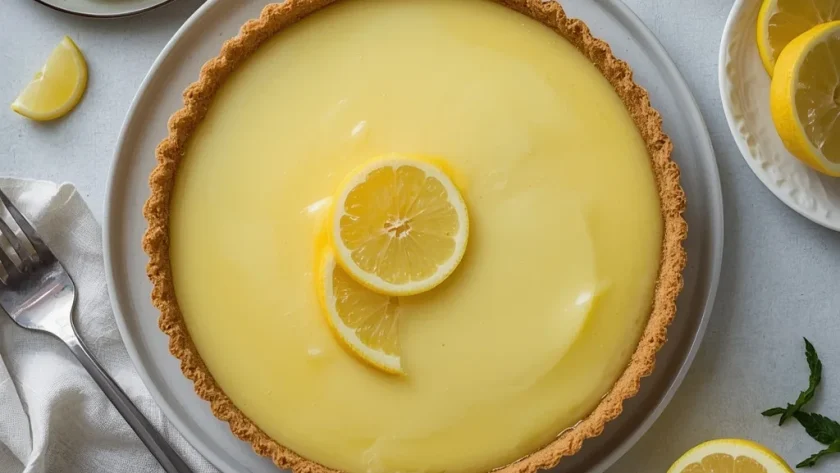
A Mary Berry Lemon Tart Recipe gives you a crisp, buttery shortcrust case filled with a silky, sharp lemon custard that sets just firm enough to slice. Fresh lemon juice and zest do the heavy lifting here, with double cream softening the edges of all that citrus. It is classic British baking at its most useful — a proper afternoon-tea pudding.
Total time runs 3 hours 30 minutes, most of it hands-off chilling and cooling. This one sits at an intermediate level: the pastry is forgiving, but the custard needs pulling from the oven while the middle still wobbles. Best made for a weekend tea, a birthday table, or any occasion where you want something cold, sharp, and clean-tasting at the end of the meal.
What is Mary Berry Lemon Tart Recipe?
It is a baked lemon custard tart built on a sweet shortcrust pastry base. Flour, cold butter, and an egg yolk make the shell; eggs, sugar, lemon juice, zest, and cream make the filling. The pastry gets blind baked first, then the custard goes in and bakes at a gentler heat until barely set. Texture-wise it lands somewhere between a set custard and a lemon posset — cool, creamy, and clean on the tongue. Make it when lemons are at their best and you want a dessert that can be made hours ahead.
Why This Recipe is Worth Trying
- Simple ingredient list — Twelve everyday items, most of which already live in your fridge and cupboard.
- Make-ahead friendly — The tart actually improves after a few hours of chilling, so it suits entertaining.
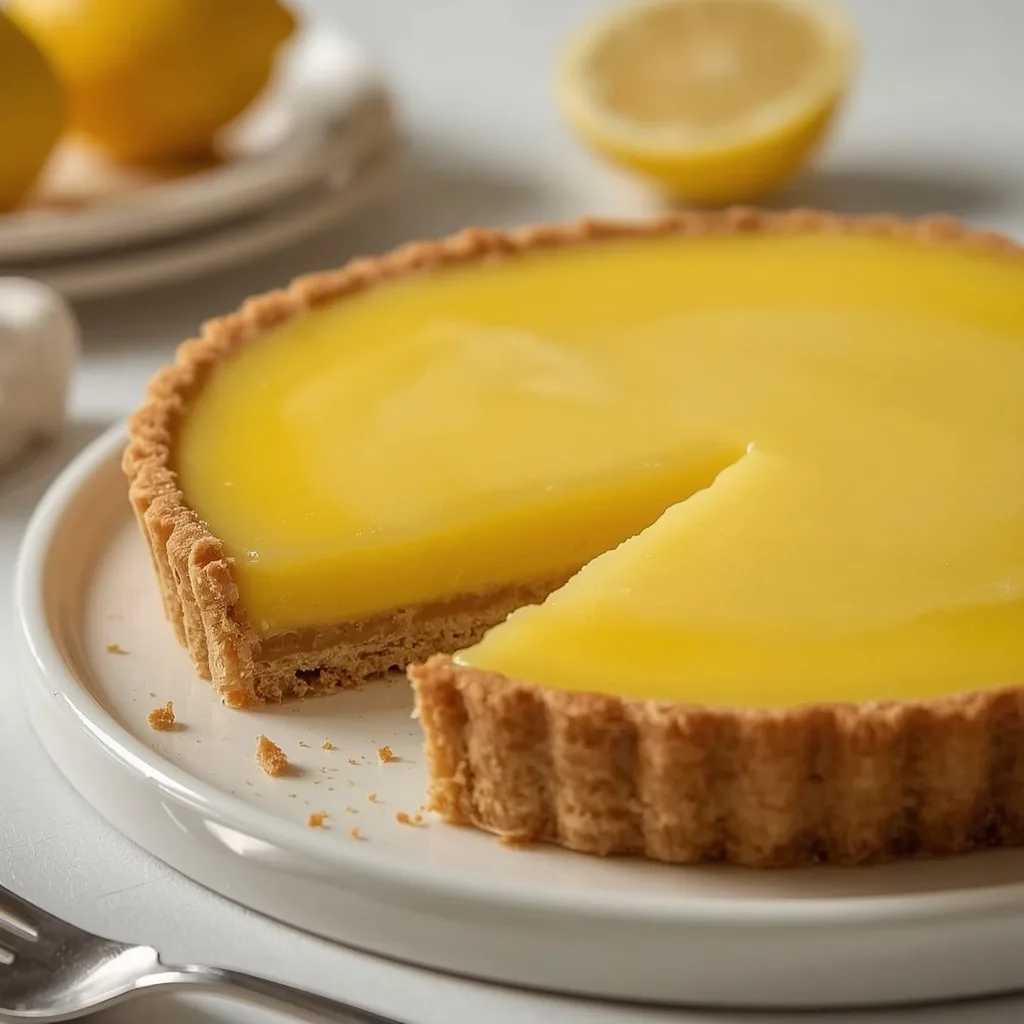
- Balanced sharpness — Real lemon juice and zest keep the custard bright rather than sugary or heavy.
- Crisp, reliable pastry — The cold butter and freezing step give a short, snappy shell that holds its shape.
- Slices cleanly — A hot knife and a properly chilled filling produce neat wedges every time.
Essential Ingredients to Make Mary Berry Lemon Tart Recipe
You probably have most of this already, and nothing here is hard to find.
For the Shortcrust Pastry
- 125g plain flour — The structural base; plain flour keeps the shell short rather than chewy. Dust extra for rolling.
- 15g icing sugar — Sweetens the pastry gently and helps it brown. Icing sugar also works for the final dusting.
- 1/4 tsp fine sea salt — Small amount, big difference; it keeps the buttery shell from tasting flat.
- 6 tbsp cold unsalted butter, cubed — Cold is non-negotiable. The pea-size flecks are what make the pastry crisp.
- 1 large egg yolk — Binds the dough and adds richness without extra water.
- 1 tbsp ice-cold water, plus 1 tsp if needed — Add the extra teaspoon only if the dough genuinely feels dry.
For the Lemon Filling
- 2 large eggs — Set the custard; whisk them gently so you do not build foam.
- 100g caster sugar — Balances the lemon without masking it.
- 80ml freshly squeezed lemon juice (from 2 medium lemons) — Bottled juice tastes flat here; squeeze it fresh.
- 1 tbsp finely grated lemon zest (from 2 medium lemons) — Where the citrus aroma comes from.
- 60ml double cream — Softens the acidity and gives a creamier set.
- 1 tbsp unsalted butter, melted — A little richness and a glossier surface.
Handy Kitchen Tools for Best Results
- 18cm loose-bottomed fluted tart tin — The loose base is what lets you lift the tart out cleanly. A fixed-base tin makes serving awkward.
- Baking beans or uncooked rice — Needed for blind baking; they hold the pastry down so it does not puff.
- Fine-mesh sieve — Strains the custard for a silkier finish and catches any lumps before baking.
- Rolling pin — Gets the pastry to roughly 3mm thick; a clean glass bottle works at a pinch.
- Wire cooling rack — Airflow underneath stops the base going soggy as it cools.
Step-by-Step Guide to Making Mary Berry Lemon Tart Recipe
Ten steps, and the order matters more than the speed. Read through once before you start.
- Make the pastry — Whisk 125g flour, 15g icing sugar and ¼ tsp salt, then rub in 85g cold cubed butter until it looks like fine breadcrumbs with a few pea-sized pieces left. Stop before it turns to paste; visible flecks of butter mean crisp pastry.
- Bind the dough — Whisk 1 egg yolk with 1 tbsp ice-cold water, add to the flour, and stir with a fork until clumps form. Add the remaining 1 tsp water only if it feels dry. Gather into a flat disc, wrap, and chill 30 minutes — do not knead.
- Roll and line the tin — Heat the oven to 190°C/170°C fan/gas 5 with a shelf in the middle. Roll the chilled pastry to a 25cm round, about 3mm thick, and line an 18cm fluted tart tin. Press into the flutes, trim, and prick the base with a fork. Freeze for 15 minutes.
- Blind bake — Line with baking paper and fill with baking beans. Bake for 15 minutes, then lift out the paper and beans and bake for 5 to 7 minutes more until pale golden and dry. Set aside and turn the oven down to 160°C/140°C fan/gas 3.
- Whisk the filling — Beat 2 eggs with 100g caster sugar for about a minute until smooth and slightly paler. Do not whisk in air; bubbles will spoil the top. Whisk in 80ml lemon juice, 1 tbsp zest, 60ml double cream and 15g melted butter.
- Strain it — Pour through a fine-mesh sieve into a jug, pressing gently on the solids. This removes any chalazae and gives a silkier custard. Stir the zest back in if you want visible flecks.
- Fill the shell — Set the warm pastry case on a baking tray on the oven shelf. Pour the filling in to within 5mm of the rim, then tap the tin gently to release large bubbles.
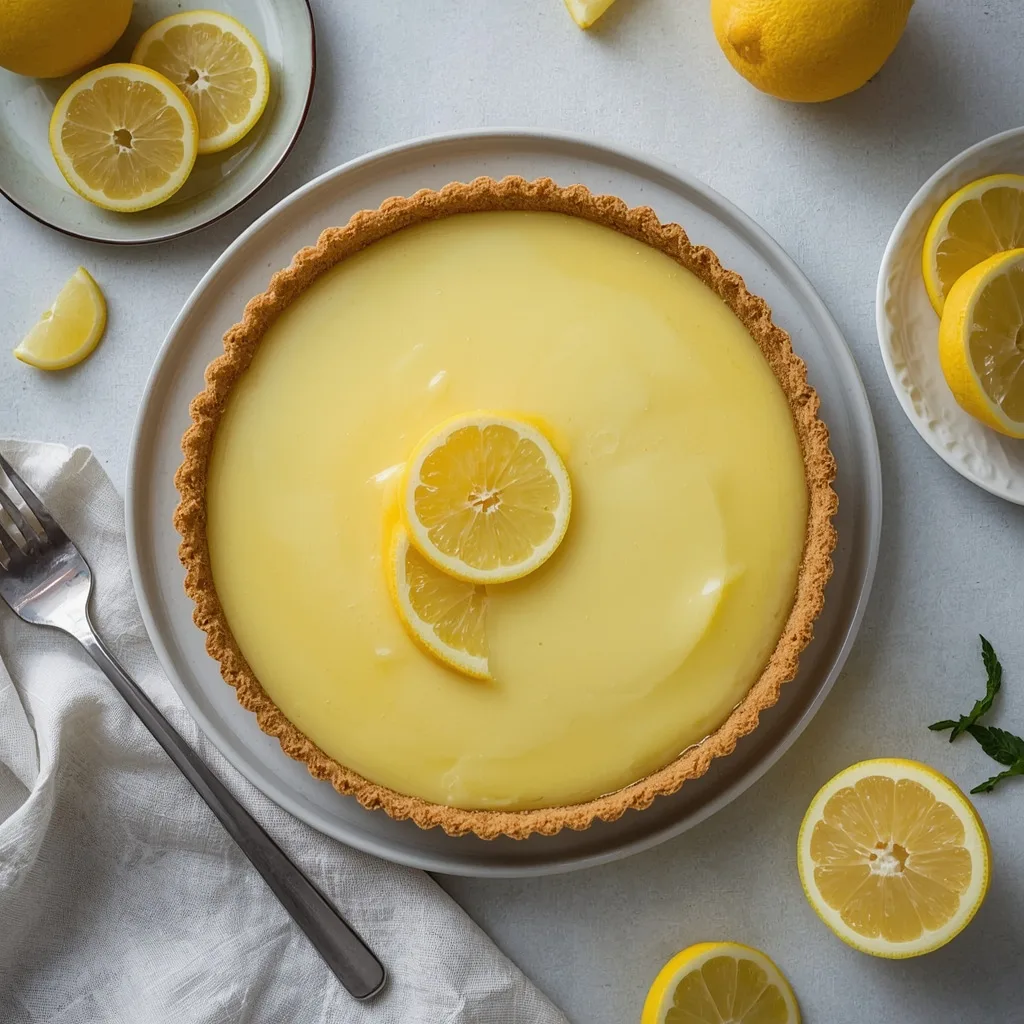
- Bake the custard — Bake at 160°C/140°C fan/gas 3 for 20 to 25 minutes, until set at the edges but still wobbling slightly in the centre. It should look glossy and barely puffed — cracking means overbaked and rubbery.
- Cool and chill — Cool completely in the tin on a wire rack for about 1 hour, then chill for at least 1 hour, or up to 3, until cold and firm.
- Serve — Remove the tart from the tin, slide onto a plate, dust with icing sugar if you like, and slice with a hot, sharp knife, wiping the blade between cuts.
What I Got Wrong (And How I Fixed It)
These are the ones that caught me out, usually more than once.
- Overworking the pastry — Kneading or handling it too long develops gluten and gives a tough shell. Fix: gather it into a disc with minimal pressure and let the chill do the work.
- Warm butter in the dough — Soft butter blends into the flour instead of staying in flecks, and the pastry turns greasy. Fix: cube it cold, chill the bowl if your kitchen is warm.
- Skipping the freeze before baking — The sides slump down the tin. Fix: 15 minutes in the freezer after lining firms everything enough to hold the flutes.
- Whipping air into the custard — A frothy filling bakes with a bubbled, patchy surface. Fix: whisk slowly and strain the mix before pouring.
- Baking until fully set — The middle cracks and the texture goes rubbery. Fix: pull it out while the centre still has a gentle wobble; it firms as it cools.
- Slicing straight from the oven — Warm custard smears instead of cutting. Fix: cool fully, then chill 1 hour minimum before the knife goes anywhere near it.
Healthier Version of Mary Berry Lemon Tart Recipe
- Trim the sugar in the filling — Drop to 70g caster sugar; the lemon still carries plenty of punch and the set stays the same.
- Swap half the cream for Greek yogurt — Use 2 tbsp double cream and 2 tbsp full-fat Greek yoghurt for a tangier custard with less saturated fat.
- Go lighter on the pastry butter — Reduce to 5 tbsp cold unsalted butter; the shell is slightly less rich but still short and crisp.
- Serve smaller slices — Cut into 6 rather than 4 for a lighter portion without touching the recipe itself.
- Skip the dusting — Leave off the icing sugar dusting; you lose nothing but a few grams of sweetness.
Ingredient Substitutions for Mary Berry Lemon Tart Recipe
- 125g plain flour → 125g white spelt flour — Gives a slightly nuttier flavour and a more tender crumb; handle it gently as it is a touch softer.
- 15g icing sugar → 15g caster sugar — Grind it finer first if you can, otherwise the pastry may show tiny flecks.
- 60ml double cream → 60ml full-fat coconut cream — Keeps the custard dairy-free and creamy; expect a faint coconut note.
- 1 tbsp unsalted butter, melted → 1 tbsp neutral oil — Works for a dairy-free filling; the surface is slightly less glossy.
- 2 medium lemons → 2 medium limes — For a sharper, more aromatic custard; keep the same juice and zest quantities.
- 1 large egg yolk → 1 tbsp full-fat milk — Binds the pastry for an egg-free shell; the texture is a little more crumbly.
Pairing Ideas: What to Serve With Mary Berry Lemon Tart Recipe
Keep the sides simple — the citrus deserves room on the plate.
- Fresh raspberries — Their tart-sweet edge cuts through the buttery pastry nicely.
- Crème fraîche — A cool, slightly tangy spoonful balances the sharp lemon custard.
- Earl Grey tea — The bergamot note echoes the citrus without competing with it.
- Vanilla ice cream — Let a scoop soften slightly beside a slice for a contrast in temperature.
- Shortbread fingers — Extra crispness on the side works if you are serving small slices.
- Iced lemonade — A cold, unsweetened glass refreshes the palate between bites.
Expert Tips to Make Perfect Mary Berry Lemon Tart Recipe
- Weigh your flour — Weigh it on digital scales; too much flour makes the pastry dry and crumbly.
- Keep everything cold — Chilled bowl, chilled hands, chilled dough. Warmth is the enemy of shortcrust.
- Zest before you juice — Once the lemon is cut, grating the peel becomes a fiddly job.
- Strain, then taste — A quick taste after straining tells you whether the balance needs a pinch more sugar.
- Use the oven shelf, not the door — Pour the filling with the tin already sitting on the pulled-out oven shelf to avoid carrying a full case across the kitchen.
- Hot knife, clean cuts — Dip the blade in hot water and wipe between slices for sharp-edged wedges.
- Chill longer than you think — Three hours in the fridge gives the cleanest slice and the best flavour.
Creative Ways to Customize Mary Berry Lemon Tart Recipe
- Add a citrus blend — Replace 1 tbsp of the lemon juice with orange juice for a softer, rounder flavour.
- Torch the top — A light sprinkle of sugar and a blast from a kitchen torch gives a brûlée-style crust.
- Fold in toasted almonds — Scatter 2 tbsp flaked almonds over the base before pouring the custard for extra crunch.
- Infuse the cream — Warm the cream with a strip of lemon peel, then cool it completely before whisking in.
- Make mini versions — Use four small tartlet tins and cut the bake time to 15 to 18 minutes.
- Swirl in raspberry — Dollop a few teaspoons of seedless raspberry purée through the filling before baking for a ripple effect.
Storing Mary Berry Lemon Tart Recipe the Right Way
- Fridge, covered — Keep it in the tin under a lid or cling film for up to 3 days; the pastry softens after the second day.
- Freezer, whole or sliced — Wrap tightly in cling film and foil for up to 1 month, then defrost overnight in the fridge.
- Airtight container for transport — Slide the chilled tart off its base into a flat container so it stays level on the journey.
- Short-term at room temperature — No more than 30 minutes out of the fridge before serving; beyond that the custard starts to slacken.
- Separate layers for slices — Stack frozen or chilled slices with baking paper between them so they do not stick.
How to Reheat Mary Berry Lemon Tart Recipe (If Needed)
Honestly, cold is how this tart is meant to be eaten. But if the pastry has gone soft, here is how to bring it back.
- Oven refresh — Warm slices at 150°C/130°C fan/gas 2 for 8 to 10 minutes, then chill the filling again before serving.
- Microwave, brief only — 10 to 15 seconds on medium per slice takes the fridge chill off without cooking the custard.
- Air fryer — 140°C for 3 to 4 minutes crisps the base; watch it closely so the filling does not bubble.
- Skip the hob — Direct heat will curdle the custard; there is no safe way to reheat it in a pan.
Nutritional Breakdown (per serving)
Based on 1 serving = 1 slice out of 4 total.
- Calories — 511
- Protein — 7.4g
- Fat — about 30g
- Saturated Fat — around 17g
- Carbohydrates — 55g
- Fibre — 1g
- Sugar — about 30g
- Sodium — 193mg
- Cholesterol — roughly 165mg
FAQs
Can I make Mary Berry Lemon Tart Recipe ahead of time?
Yes, and it is better that way. Bake it the morning you need it, cool fully, then chill for at least 1 hour. It holds well for up to 3 days covered in the fridge.
Why did my lemon filling crack?
Almost always overbaking. The custard should still wobble slightly in the centre when you nudge the tin. The heat left in the tart finishes the set as it cools.
Can I freeze Mary Berry Lemon Tart Recipe?
Whole or in slices, wrapped tightly in cling film and foil, it freezes for up to 1 month. Defrost overnight in the fridge and serve cold.
How do I stop the pastry shrinking?
Freeze the lined shell for 15 minutes before blind baking. Pressing the pastry firmly into the flutes and pricking the base also helps it hold shape.
Can I use bottled lemon juice?
You can, but the flavour is noticeably flatter. Fresh juice from 2 medium lemons, plus the zest, gives the aroma that makes this tart taste like lemon rather than sugar.
How long does Mary Berry Lemon Tart Recipe last in the fridge?
Up to 3 days, covered. The pastry is at its best on day one and starts softening after the second day, so plan to eat it within that window.
Try These Recipes
Wrapping It Up
Cold, sharp, and neatly sliced — that is what a good lemon tart should be, and this Mary Berry Lemon Tart Recipe delivers it without any fuss. Take your time with the pastry, pull the custard out early, and let the fridge do the rest. Give it a go this weekend and see how quickly it disappears.
PrintMary Berry Lemon Tart Recipe

A crisp, buttery shortcrust case filled with a silky, sharp lemon custard. The filling is set just enough to slice cleanly, with a bright citrus aroma and a cool, creamy finish. It is a classic British afternoon-tea pudding best served chilled.
- Prep Time: 30
- Cook Time: 45
- Total Time: 210
- Yield: 4 1x
- Category: Dessert
- Method: Baking
- Cuisine: British
Ingredients
For the pastry
- 125g plain flour, plus extra for dusting
- 15g icing sugar, plus extra for dusting
- ¼ tsp fine sea salt
- 85g cold unsalted butter, cubed
- 1 large egg yolk
- 1 tbsp ice-cold water, plus 1 tsp if needed
For the filling
- 2 large eggs
- 100g caster sugar
- 80ml freshly squeezed lemon juice (from 2 medium lemons)
- 1 tbsp finely grated lemon zest (from 2 medium lemons)
- 60ml double cream
- 15g unsalted butter, melted
Instructions
- In a medium bowl, whisk together the flour, icing sugar and salt. Add the cold butter and toss to coat, then rub it into the flour with your fingertips, or pulse in a food processor, until the mixture looks like fine breadcrumbs with a few pea-sized pieces of butter left. Stop before it turns into a paste; visible flecks of butter help the pastry bake crisp.
- Whisk the egg yolk with 1 tbsp ice-cold water. Add to the flour mixture and stir with a fork until clumps begin to form, adding the extra 1 tsp water only if the dough feels dry. Gather into a flat disc, wrap in cling film and chill for 30 minutes; do not knead, or the pastry will be tough.
- Preheat the oven to 190°C/170°C fan/gas 5 with a shelf in the middle. Roll the chilled pastry on a lightly floured surface into a 25cm round about 3mm thick, then line an 18cm loose-bottomed fluted tart tin. Press the pastry gently into the flutes, trim the excess and prick the base all over with a fork. Freeze for 15 minutes to help stop it shrinking.
- Line the pastry case with baking paper and fill with baking beans or uncooked rice. Bake blind for 15 minutes, then lift out the paper and beans and bake for a further 5–7 minutes, until the pastry is pale golden and dry to the touch. Set aside and turn the oven down to 160°C/140°C fan/gas 3.
- For the filling, whisk the eggs and caster sugar in a bowl for about 1 minute, until smooth and slightly paler. Do not whisk in lots of air, as bubbles will spoil the surface. Whisk in the lemon juice, lemon zest, double cream and melted butter until evenly combined.
- Strain the filling through a fine sieve into a jug, pressing gently on the solids, for a silkier custard. Stir the zest back in if you want visible flecks and a stronger lemon aroma.
- Put the warm pastry case on a baking tray and set it on the oven shelf. Pour the filling into the case to within 5mm of the rim, then tap the tin gently to release any large bubbles.
- Bake for 20–25 minutes, until the filling is set at the edges but the centre still wobbles slightly when nudged. It should look glossy and barely puffed, not cracked; overbaking makes the filling rubbery.
- Cool the tart completely in the tin on a wire rack for about 1 hour. Then chill for at least 1 hour, or up to 3 hours, until the filling is cold and firm enough to slice cleanly.
- To serve, remove the tart from the tin and slide it onto a serving plate. Dust lightly with icing sugar if you like, and slice with a hot, sharp knife, wiping the blade between cuts. Serve chilled.
Notes
Keep the tart covered in the fridge for up to 3 days; the pastry will soften after the second day. Freeze whole or in slices, wrapped tightly in cling film and foil, for up to 1 month, then defrost overnight in the fridge. Serve cold rather than reheated; if the pastry needs crisping, warm slices at 150°C/130°C fan/gas 2 for 8–10 minutes, then chill the filling again before serving.
Nutrition
- Calories: 511
- Sugar: 30g
- Sodium: 193mg
- Unsaturated Fat: 17g
- Carbohydrates: 55g
- Fiber: 1g
- Protein: 7.4g
- Cholesterol: 214mg
Keywords: mary berry lemon tart, lemon tart recipe, British lemon tart, classic lemon tart, shortcrust pastry tart, baked lemon custard tart, easy lemon pudding, afternoon tea dessert, homemade lemon tart, tarte au citron, silky lemon filling