
 Ekani Ella
 A perfectly roasted whole chicken is one of the most comforting meals you can make. It has crispy golden skin, tender meat, and rich flavor that fills your kitchen with an irresistible aroma. Whether you’re preparing a Sunday family dinner or meal prepping for the week, roasting a whole chicken is a skill every home cook should master.
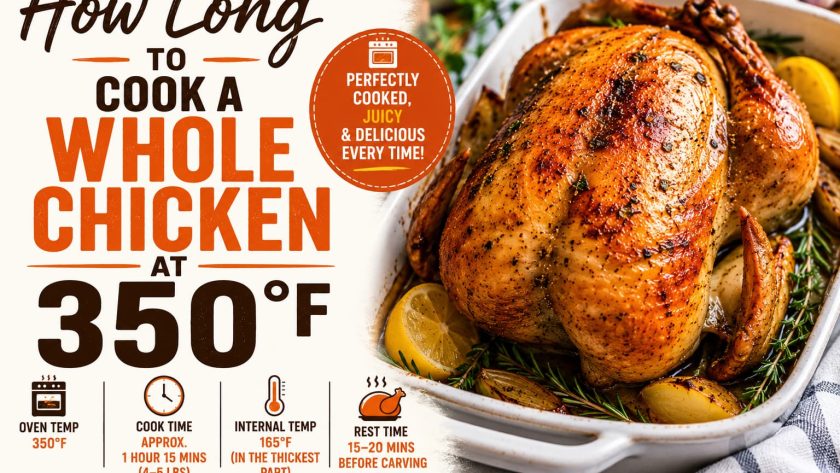
The biggest question most people ask is: How long do you cook a whole chicken at 350°F?
The answer depends mainly on the chicken’s weight. A small 3-pound chicken cooks much faster than a 6-pound bird. While time is important, the safest and most accurate way to know when your chicken is done is by checking its internal temperature.
Think of roasting a whole chicken like baking a loaf of bread. The outside may look perfectly browned before the inside has finished cooking. That’s why combining the right cooking time with a meat thermometer gives the best results.
Why 350°F Is a Popular Temperature for Roasting Chicken
Many home cooks prefer roasting chicken at 350°F (175°C) because it provides steady, even cooking.
At this temperature:
- The meat cooks gently without drying out.
- The skin develops a beautiful golden color.
- The chicken has enough time to cook evenly from the outside to the center.
- It’s easier to avoid burning the skin before the meat reaches a safe temperature.
Although higher temperatures cook the chicken faster, 350°F offers a forgiving balance between moisture and flavor.
How Long to Cook a Whole Chicken at 350°F
A general guideline is:
Roast the chicken for about 20 minutes per pound, plus an additional 15 to 20 minutes.
Here’s a quick reference table.
| Chicken Weight | Cooking Time at 350°F |
|---|---|
| 3 pounds | 1 hour 15 minutes to 1 hour 30 minutes |
| 4 pounds | 1 hour 30 minutes to 1 hour 45 minutes |
| 5 pounds | 1 hour 45 minutes to 2 hours |
| 6 pounds | 2 hours to 2 hours 20 minutes |
| 7 pounds | 2 hours 20 minutes to 2 hours 40 minutes |
These times are estimates. Always verify doneness with a meat thermometer.
Internal Temperature Matters More Than Time
Cooking time is only part of the equation.
The USDA recommends cooking whole chicken until the thickest part of the thigh reaches:
165°F (74°C)
Insert an instant-read thermometer into:
- The thickest part of the thigh
- The breast
- Avoid touching the bone
When both the thigh and breast reach a safe temperature, the chicken is ready to serve.
How to Prepare a Whole Chicken Before Roasting
Good preparation makes a noticeable difference.
Follow these simple steps:
- Remove the giblets from the cavity.
- Pat the chicken completely dry using paper towels.
- Brush the skin with olive oil or melted butter.
- Season generously inside and out.
- Tuck the wing tips underneath the bird.
- Tie the legs together with kitchen twine if desired.
Dry skin helps create a crisp, golden finish during roasting.
Should You Roast a Whole Chicken Covered or Uncovered?
Most recipes recommend roasting the chicken uncovered.
Roasting Uncovered
This method produces:
- Crispy skin
- Better browning
- Rich roasted flavor
Roasting Covered
Covering with foil traps moisture, creating softer skin.
If the chicken begins browning too quickly, loosely cover it with foil during the final part of cooking.
Should You Place the Chicken on a Rack?
Using a roasting rack offers several advantages.
It allows:
- Better air circulation
- Even cooking
- Crispier skin
- Easier cleanup
If you don’t have a rack, place the chicken on a bed of onions, carrots, and celery.
The vegetables naturally lift the chicken while adding flavor to the drippings.
Should You Stuff the Chicken?
Stuffing the cavity with aromatics is an excellent idea.
Popular options include:
- Lemon halves
- Garlic cloves
- Onion wedges
- Fresh rosemary
- Thyme
- Sage
- Parsley
These ingredients add subtle flavor without significantly affecting cooking time.
If you’re cooking traditional bread stuffing inside the chicken, the cooking time will increase, and the stuffing must also reach 165°F for food safety.
How to Season a Whole Chicken
Simple seasonings often produce the best results.
Try using:
- Kosher salt
- Black pepper
- Garlic powder
- Onion powder
- Paprika
- Smoked paprika
- Italian seasoning
- Thyme
- Rosemary
- Parsley
- Lemon zest
You can also place herb butter beneath the skin for even more flavor and moisture.
Should You Baste the Chicken?
Basting is optional.
Some cooks enjoy basting every 30 to 40 minutes using pan juices or melted butter.
While basting adds flavor, opening the oven repeatedly lowers the temperature and may increase cooking time.
For many home cooks, simply brushing the chicken with butter before roasting works just as well.
How to Tell When a Whole Chicken Is Done
Rather than relying only on cooking time, look for these signs.
The chicken is ready when:
- The thigh reaches 165°F.
- The breast reaches 165°F.
- The juices run mostly clear when pierced.
- The legs move easily in their joints.
- The skin is golden brown and crisp.
A meat thermometer remains the most reliable tool.
Should You Rest the Chicken After Roasting?
Yes. Resting is one of the most important steps.
After removing the chicken from the oven:
- Tent it loosely with foil.
- Let it rest for 15 to 20 minutes.
During this time, the juices redistribute throughout the meat.
Slice it too soon, and those juices will end up on the cutting board instead of inside every bite.
Think of resting as giving the chicken a few quiet minutes to finish its journey.
Common Mistakes to Avoid
Roasting chicken is straightforward, but these mistakes can affect the results.
Skipping the Meat Thermometer
Cooking time varies depending on the size of the bird.
A thermometer removes the guesswork.
Not Drying the Skin
Moisture prevents crisp browning.
Always pat the skin dry before seasoning.
Cooking Straight from the Refrigerator
Allow the chicken to sit at room temperature for 20 to 30 minutes before roasting.
This promotes more even cooking.
Opening the Oven Too Often
Each time the oven door opens, heat escapes.
Resist the temptation to check the chicken repeatedly.
Carving Immediately
Resting keeps the meat juicy.
Expert Tips for a Perfect Roast Chicken
These small techniques can improve your results every time.
- Buy the freshest chicken possible.
- Season generously inside and out.
- Use softened butter beneath the skin.
- Roast breast-side up.
- Rotate the roasting pan halfway through cooking if your oven has hot spots.
- Use a roasting rack whenever possible.
- Check the temperature early rather than late.
- Rest before carving.
These habits help create flavorful, juicy chicken with crisp skin.
How to Carve a Whole Chicken
Once the chicken has rested:
- Remove the kitchen twine.
- Slice off each leg.
- Separate the thighs from the drumsticks.
- Remove the wings.
- Slice each breast against the grain.
- Arrange the pieces on a serving platter.
Carving against the grain helps create more tender slices.
How to Store Leftover Roast Chicken
Leftover chicken is incredibly versatile.
Refrigerator
Store cooled chicken in an airtight container for up to 4 days.
Freezer
Wrap individual portions tightly before freezing.
Properly stored, cooked chicken maintains its best quality for about 3 months.
Label the containers with the freezing date.
How to Reheat Roast Chicken
Gentle reheating helps preserve moisture.
Oven
Bake at 325°F for about 20 minutes.
Cover loosely with foil to prevent drying.
Microwave
Heat in short intervals with a splash of broth or water.
Skillet
Warm over medium-low heat with a little butter or chicken broth.
Avoid overheating, as chicken can dry out quickly.
Best Side Dishes for Roast Chicken
Whole roasted chicken pairs well with many comforting sides.
Some popular options include:
- Mashed potatoes
- Roasted carrots
- Green beans
- Steamed broccoli
- Brown rice
- Stuffing
- Dinner rolls
- Sweet potatoes
- Corn on the cob
- Caesar salad
- Roasted Brussels sprouts
- Garlic butter asparagus
These side dishes create a balanced and satisfying meal.
Health Benefits of Roast Chicken
Whole chicken is not only flavorful but also nutritious.
It provides:
- High-quality protein
- B vitamins
- Iron
- Zinc
- Selenium
- Phosphorus
Removing the skin reduces the fat content, while keeping the skin on adds flavor and helps retain moisture during cooking.
Frequently Asked Questions
How long does it take to cook a whole chicken at 350°F?
A whole chicken generally needs about 20 minutes per pound plus 15 to 20 additional minutes. Always confirm doneness with a meat thermometer.
What temperature should a whole chicken reach?
The thickest part of the thigh and the breast should both reach 165°F (74°C) before serving.
Should I roast a whole chicken covered or uncovered?
Roasting uncovered produces crispier skin. Cover loosely with foil only if the skin begins to brown too quickly.
Should I baste my chicken while roasting?
Basting is optional. It can add flavor, but frequent oven opening may extend the cooking time.
Can I cook stuffing inside the chicken?
Yes, but both the chicken and the stuffing must reach 165°F before serving.
How long should I let roast chicken rest?
Allow the chicken to rest for 15 to 20 minutes before carving to keep the meat juicy.
Final Thoughts
Knowing how long to cook a whole chicken at 350°F helps you prepare a meal that’s both safe and delicious. While the exact cooking time depends on the bird’s weight, using about 20 minutes per pound plus an additional 15 to 20 minutes provides a reliable starting point.
Remember that time alone isn’t enough. A meat thermometer is your best tool for ensuring perfectly cooked chicken every time. Pair that with proper seasoning, a well-preheated oven, and a short resting period, and you’ll enjoy tender meat, crispy skin, and incredible flavor.
The next time you’re roasting a whole chicken, keep this guide nearby. With a little patience and the right technique, you’ll serve a beautifully roasted bird that’s worthy of any family dinner or special occasion.