
 Ekani Ella
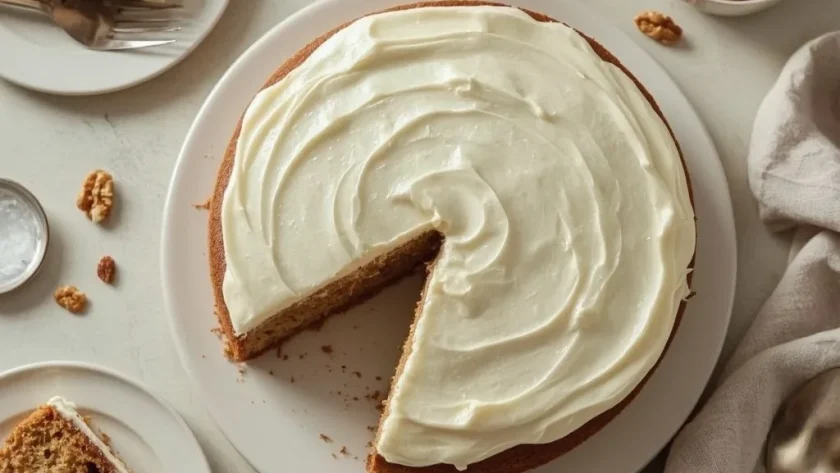
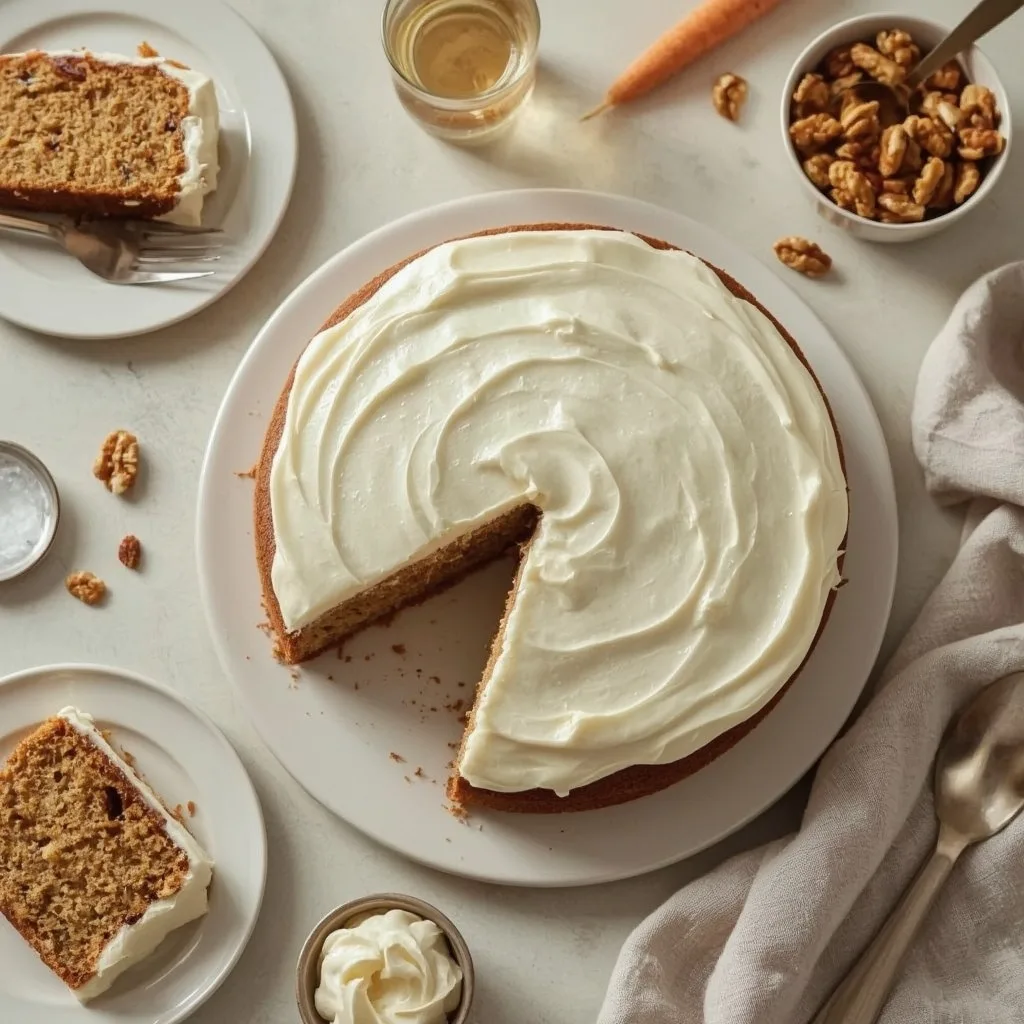
This Mary Berry Classic Carrot Cake Recipe is a small British bake that stays properly moist, warmly spiced and packed with grated carrot, walnuts and raisins. Baking it in a 15cm round tin keeps the whole thing manageable — one layer, a tangy cream cheese icing, and enough for four people.
Total time comes to 55 minutes, with 20 minutes of prep and 35 minutes in the oven. It sits at beginner level, though folding the flour in gently is the one step that decides whether the crumb stays tender. Afternoon tea, a birthday, or a quiet Sunday bake all suit it.
What is Mary Berry Classic Carrot Cake Recipe?
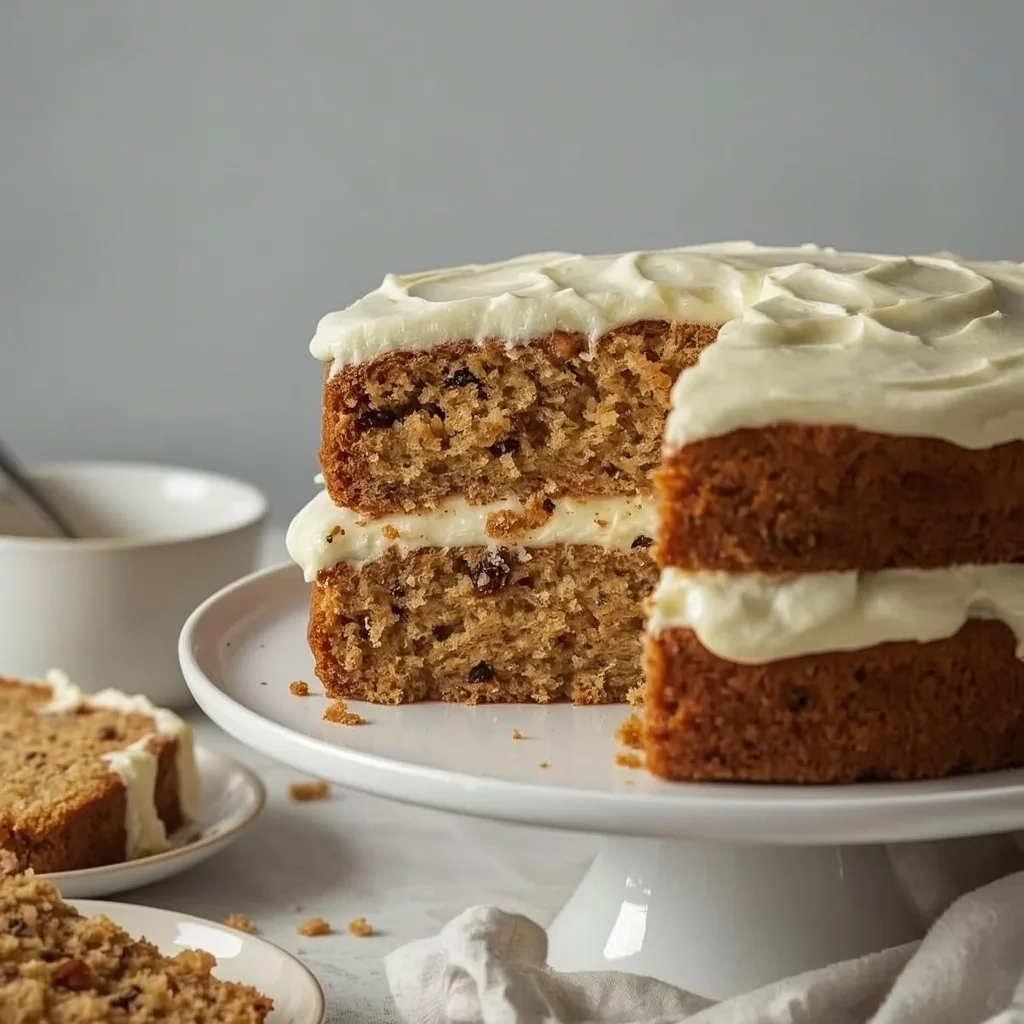
It is a single-layer carrot sponge made by whisking oil, light brown sugar and eggs, then folding in flour, cinnamon and nutmeg along with grated carrot, walnuts and raisins. Everything bakes in one 15cm tin at 180°C/160°C fan/gas 4 for 30 to 35 minutes. Expect a soft, slightly dense crumb, gentle warmth from the spice and a sharp tang from the cream cheese icing spread on top. Serve it with a cup of tea, or make it when you want a small cake that will not sit around for a week.
Why This Recipe is Worth Trying
Four solid reasons this one earns a place in your regular rotation.
- Small batch, no waste — a 15cm tin gives you four generous slices, so nothing dries out on the side.
- One layer, one wash-up — the cake bakes flat and gets frosted on top, which means no trimming, no stacking, and no crumb coat.
- Warm spice, not sweet heat — cinnamon and freshly grated nutmeg sit in the background and let the carrot do the talking.
- Texture that holds up — the oil keeps it soft for days, and the walnuts and raisins give you something to bite into.
- Icing worth the effort — lemon juice in the cream cheese mixture cuts the sugar and stops it tasting flat.
Essential Ingredients to Make Mary Berry Classic Carrot Cake Recipe
Everything here is a standard supermarket item, and the quantities are sized for one small tin rather than a full layer cake.
Dry Ingredients
- Plain flour (95g) — the structure of the cake; plain flour works fine, just do not swap in self-raising without adjusting the leaveners.
- Baking powder (1/2 teaspoon) — gives the first lift, so check the tin date before you start.
- Bicarbonate of soda (1/2 teaspoon) — reacts with the brown sugar and helps the crumb brown properly.
- Fine sea salt (1/2 teaspoon) — a small amount, but without it the spice tastes hollow.
- Ground cinnamon (1 teaspoon) — the dominant warm note; a fresh jar makes a noticeable difference.
- Freshly grated nutmeg (1/4 teaspoon) — sharper and more aromatic than the pre-ground kind.
Wet Ingredients
- Light brown soft sugar (100g) — brings moisture and a faint caramel edge; press it down when measuring.
- Eggs (2 large, at room temperature) — cold eggs seize up the batter, so leave them out for 30 minutes first.
- Sunflower or vegetable oil (120ml) — sunflower or vegetable; it keeps the cake soft and does not set hard like melted butter.
- Vanilla extract (1 teaspoon) — rounds off the spice and the sugar.
Add-Ins
- Finely grated carrots (110g, about 2 medium) — grate on the small holes so the shreds disappear into the crumb.
- Chopped walnuts (30g) — toast them first if you have five spare minutes.
- Raisins (40g) — plump them in warm water for ten minutes if they feel hard.
Cream Cheese Icing
- Full-fat cream cheese (115g, softened) — the full-fat block or tub, not a light version, or the icing will go runny.
- Unsalted butter (2 tablespoons, softened) — adds body and stops the icing sliding off the cake.
- Icing sugar (90g, sifted) — sifting is not optional; lumps will not beat out.
- Vanilla extract (1/2 teaspoon) — a second hit of flavour in the topping.
- Fresh lemon juice (1 teaspoon) — brightens the whole thing and balances the sugar.
Handy Kitchen Tools for Best Results
You probably own most of these already.
- 15cm round cake tin — the right size for this quantity; a 20cm tin will give you a thin, dry cake.
- Wire cooling rack — lifting the cake off the hot tin stops the base sweating.
- Offset spatula — a butter knife works at a push, but the angled blade makes those gentle swirls easy.
- Two mixing bowls — one medium, one large; keeping wet and dry separate is what gives you an even crumb.
- Silicone spatula — for folding, where a whisk would overwork the batter in seconds.
Step-by-Step Guide to Making Mary Berry Classic Carrot Cake Recipe
Ten steps, start to finish, in the order that keeps the batter from splitting or tightening up.
- Prepare the tin and oven — heat the oven to 180°C/160°C fan/gas 4, butter a 15cm round tin, line the base with baking paper and lightly flour the sides so the cake comes out cleanly.
- Whisk the dry ingredients — combine the flour, baking powder, bicarbonate of soda, salt, cinnamon and nutmeg in a medium bowl until evenly mixed, then set aside.
- Combine the wet ingredients — whisk the brown sugar, eggs, oil, and vanilla in a large bowl for about a minute until smooth and slightly thickened, breaking up any sugar lumps as you go.
- Stir in the carrot, walnuts, and raisins — fold them through the wet mixture until evenly distributed; it will look loose and glossy, which is exactly right.
- Fold the flour in — add the dry mix in two additions, folding gently with a spatula and stopping the moment no flour streaks remain. Overmixing here is the difference between tender and tough.
- Bake until golden — scrape the mixture into the tin, level the top and bake for 30 to 35 minutes until deep golden and a skewer in the centre comes out clean. Turn the tin halfway if one side browns faster.
- Cool completely — leave it in the tin on a rack for 10 minutes, then turn out, peel off the baking paper and cool for about 45 minutes. Icing a warm cake will melt it on contact.
- Beat the icing — beat the cream cheese and butter until smooth, about a minute, then add the sifted icing sugar, vanilla and lemon juice and beat on low then high until light and spreadable, roughly 2 minutes.
- Frost the top — set the cooled cake on a plate and spread the icing with a palette knife, leaving soft swirls; scatter a few extra chopped walnuts over if you like.
- Rest before slicing — let the frosted cake sit at room temperature for 15 minutes so the cuts come out clean, then serve.
What I Got Wrong (And How I Fixed It)
These are the mistakes that actually ruined batches in my kitchen, not theoretical ones.
- Overmixing the batter — mixing until perfectly smooth develops the gluten and gives you a rubbery slice; fold just until the flour disappears.
- Cold cream cheese — straight from the fridge it stays lumpy no matter how long you beat it; leave it out for at least an hour.
- Coarsely grated carrot — big shreds leave visible orange strings and a wet pocket at the base; use the fine side of the grater.
- Icing a warm cake — even slightly warm, the butter in the icing melts and slides down the sides; wait the full cooling time.
- Skipping the baking paper — greasing alone is not enough with a carrot batter; the paper guarantees a clean release.
- Pulling it out too early — a skewer with wet crumbs means five more minutes, not three; the middle sets last.
Healthier Version of Mary Berry Classic Carrot Cake Recipe
None of these turn it into a diet food, but they trim the heaviest parts without wrecking the texture.
- Cut the sugar to 70g — brown sugar can drop by roughly a third before the crumb turns dry, and the carrot and raisins carry sweetness.
- Wholemeal blend instead of plain flour — swap half the flour for wholemeal to add fibre, and expect a slightly nuttier flavour.
- Lighter icing — use 80g icing sugar instead of 90g and add an extra teaspoon of lemon juice for sharpness.
- Extra carrot, fewer raisins — bump the grated carrot up and pull the raisins back to 2 tablespoons to cut sugar while keeping moisture.
- Smaller portions — slice the cake into six instead of four; the richness goes a long way.
Ingredient Substitutions for Mary Berry Classic Carrot Cake Recipe
Each of these has been tested against the original, and the amounts matter.
- Sunflower oil (120ml) → melted coconut oil (120ml) — works measure for measure, though it adds a faint coconut note and firms up when cold.
- Raisins (40g) → chopped dried apricots (40g) — slightly tart and chewier; chop them small so they do not sink.
- Walnuts (30g) → pecan pieces (30g) — a softer, sweeter nut that toasts just as well.
- Plain flour (95g) → gluten-free plain flour (95g) — add 1/4 teaspoon xanthan gum and let the batter rest 10 minutes before baking.
- Cream cheese (115g) → mascarpone (115g) — richer and less tangy; keep the lemon juice in and chill the frosted cake briefly.
- Light brown soft sugar (100g) → coconut sugar (100g) — swap directly, though the crumb comes out a shade darker.
Pairing Ideas: What to Serve With Mary Berry Classic Carrot Cake Recipe
The cake is rich, so keep the rest of the table light and sharp.
- Strong English breakfast tea — the tannin cuts through the cream cheese icing better than a delicate blend would.
- Peppermint or lemon verbena infusion — a caffeine-free option that freshens the palate between bites.
- Vanilla ice cream — serve a small scoop alongside a warm slice for contrast; cold cream against soft spice works.
- A handful of raspberries — their acidity lifts the sweetness and adds colour to the plate.
- Toasted walnut halves — scatter a few extra on top for crunch and a visual cue about what is inside.
- Plain Greek yogurt with honey — a lighter alternative to cream that keeps the whole thing from feeling heavy.
Expert Tips to Make Perfect Mary Berry Classic Carrot Cake Recipe
Small adjustments, noticeable results.
- Weigh the carrot after grating — two medium carrots should give you about 100 grams; too much and the cake turns soggy.
- Room temperature eggs and cream cheese — both emulsify far more easily, and the batter will not look curdled.
- Fold with a spatula, never a whisk — a whisk whips air in and strengthens the gluten, which is the opposite of what you want here.
- Turn the tin at the 20-minute mark — small ovens run hot at the back, and this keeps the top level.
- Sift the icing sugar twice — once into the bowl is fine, but a second pass gives you a genuinely silky icing.
- Chill the cake for 15 minutes before icing — a firm surface holds the swirls and stops any crumbs lifting.
- Toast the walnuts beforehand — five minutes in a dry frying pan releases the oils and makes a real difference to the finished flavour.
Creative Ways to Customize Mary Berry Classic Carrot Cake Recipe
Once the base recipe is reliable, these changes are worth playing with.
- Add orange zest — a teaspoon in the batter alongside the cinnamon gives a citrus lift that plays well with the carrot.
- Swap in mixed spice — replace the cinnamon with the same amount of mixed spice for a warmer, more traditional British flavour.
- Two-layer version — double everything and bake in two 15cm tins for 25 to 30 minutes, then sandwich with icing.
- Coconut and pineapple — fold 2 tablespoons of desiccated coconut and 2 tablespoons of well-drained crushed pineapple into the batter, and reduce the oil by a tablespoon.
- Nut-free for school — replace the walnuts with an equal volume of sunflower seeds, or leave them out and add 2 extra tablespoons of raisins.
- Loaf tin bake — a 450g (1lb) loaf tin works, but expect a longer bake; start checking at 40 minutes.
Storing Mary Berry Classic Carrot Cake Recipe the Right Way
Cream cheese icing dictates the storage rules here, so do not leave it out overnight.
- Fridge, airtight — keep the frosted cake in a sealed container for up to 4 days; let slices sit out 30 minutes before eating.
- Freezing the cake — wrap the un-iced sponge tightly in cling film and freeze for up to 3 months, then defrost overnight in the fridge.
- Icing, frozen separately — it keeps for up to 2 months; defrost in the fridge and rebeat briefly before spreading.
- Room temperature serving — bring slices up to room temperature for 30 minutes so the crumb softens and the icing loosens.
- Microwave, avoid — heating a frosted slice separates the cream cheese and leaves an oily pool; skip it entirely.
How to Reheat Mary Berry Classic Carrot Cake Recipe (If Needed)
Honestly, this cake is best at room temperature. If you do want it warm, these are the safest routes.
- Oven method — 150°C/130°C fan/gas 2 for 5 to 7 minutes with the slice loosely covered in foil; watch the icing, which softens fast.
- Microwave, icing scraped off — 10 to 15 seconds on medium is plenty; any longer and the edges turn rubbery.
- Air fryer — 150°C/130°C fan/gas 2 for 3 to 4 minutes, checking after 2; small pieces heat quickly and can scorch the nuts.
- Frying pan warm-up — low heat, lid on, 4 to 5 minutes for an unfrosted slice; the base crisps slightly, which some people prefer.
Nutritional Breakdown (per serving)
Based on 1 serving = one quarter of the 15cm cake, with icing included.
- Calories — 798
- Protein — 10g
- Fat — about 51g
- Carbohydrates — 81g
- Fibre — roughly 3g
- Sugar — around 56g
- Sodium — 418mg
FAQs
Can I freeze Mary Berry Classic Carrot Cake Recipe?
Yes, but freeze the sponge un-iced. Wrap it tightly in cling film, freeze for up to 3 months, and defrost overnight in the fridge before icing it with a fresh batch.
How long does Mary Berry Classic Carrot Cake Recipe last in the fridge?
Up to 4 days in an airtight container. After that the crumb starts to dry out and the icing loses its fresh tang, so freeze any slices you will not eat in time.
Can I make Mary Berry Classic Carrot Cake Recipe in a bigger tin?
Yes. Double the ingredients and bake in a 20cm round tin for 45 to 50 minutes, checking with a skewer from 40 minutes, then use double the icing.
Small, moist and properly spiced, this carrot cake is the kind of bake you can make on a whim and finish before it goes stale. Weigh the ingredients, let the sponge cool completely, and save the cream cheese icing for the very end.
PrintMary Berry Classic Carrot Cake Recipe
This small Mary Berry-inspired carrot cake is moist, warmly spiced and packed with grated carrot, walnuts and raisins. A tangy cream cheese icing balances the gentle sweetness, while the tender crumb makes it perfect for afternoon tea. Baked in a 15cm tin, it serves four.
- Prep Time: 20
- Cook Time: 35
- Total Time: 55
- Yield: 4 1x
- Category: Dessert
- Method: Baking
- Cuisine: British
Ingredients
For the cake
- 95g plain flour
- ½ tsp baking powder
- ½ tsp bicarbonate of soda
- ½ tsp fine sea salt
- 1 tsp ground cinnamon
- ¼ tsp freshly grated nutmeg
- 100g light brown soft sugar
- 2 large eggs, at room temperature
- 120ml sunflower or vegetable oil
- 1 tsp vanilla extract
- 110g finely grated carrots (about 2 medium carrots)
- 30g chopped walnuts
- 40g raisins
For the cream cheese icing
- 115g full-fat cream cheese, softened
- 30g unsalted butter, softened
- 90g icing sugar, sifted
- ½ tsp vanilla extract
- 1 tsp fresh lemon juice
Instructions
- Preheat the oven to 180°C/160°C fan/gas 4. Grease a 15cm round cake tin with butter, line the base with baking paper and lightly flour the sides so the cake comes out cleanly.
- In a medium bowl, whisk together the flour, baking powder, bicarbonate of soda, salt, cinnamon and nutmeg until evenly combined. Set aside.
- In a large bowl, whisk the light brown sugar, eggs, oil and vanilla until smooth and slightly thickened, about 1 minute. Break up any lumps of sugar with the whisk.
- Stir the grated carrots, walnuts and raisins into the wet mixture until evenly spread. It will look loose and glossy at this stage, which is exactly right.
- Add the dry ingredients in two goes, folding gently with a spatula until just combined. Stop as soon as no streaks of flour remain; overmixing makes the cake dense rather than tender.
- Scrape the mixture into the prepared tin and level the top. Bake for 30–35 minutes, until deep golden and a skewer pushed into the centre comes out clean. Turn the tin halfway through if it is browning unevenly.
- Cool in the tin on a wire rack for 10 minutes, then turn out, peel off the baking paper and leave to cool completely, about 45 minutes. Do not ice a warm cake or the icing will melt.
- For the icing, beat the cream cheese and butter in a medium bowl until smooth, about 1 minute. Add the icing sugar, vanilla and lemon juice, then beat on low and then high speed until light and spreadable, about 2 minutes.
- Place the cold cake on a serving plate. Spread the icing over the top with a palette knife, making gentle swirls. Scatter over a few extra chopped walnuts if you like.
- Leave the iced cake at room temperature for 15 minutes before slicing so the cuts are clean. Serve at room temperature and keep any leftovers covered in the fridge.
Notes
Keep the iced cake in an airtight container in the fridge for up to 4 days. To freeze, wrap the un-iced cake tightly in cling film and freeze for up to 3 months; defrost overnight in the fridge. Freeze the icing separately for up to 2 months, defrost in the fridge and beat again before using. Bring slices to room temperature for 30 minutes before serving; do not microwave the iced cake, as the icing will separate.
Nutrition
- Calories: 798
- Sugar: 56g
- Sodium: 418mg
- Unsaturated Fat: 15g
- Carbohydrates: 81g
- Fiber: 3g
- Protein: 10g
- Cholesterol: 139mg
Keywords: Mary Berry carrot cake, classic carrot cake, British carrot cake, carrot cake recipe, small carrot cake, cream cheese icing, spiced carrot cake, walnut carrot cake, easy baking recipe, afternoon tea cake, 15cm carrot cake, homemade cake


