
 Ekani Ella
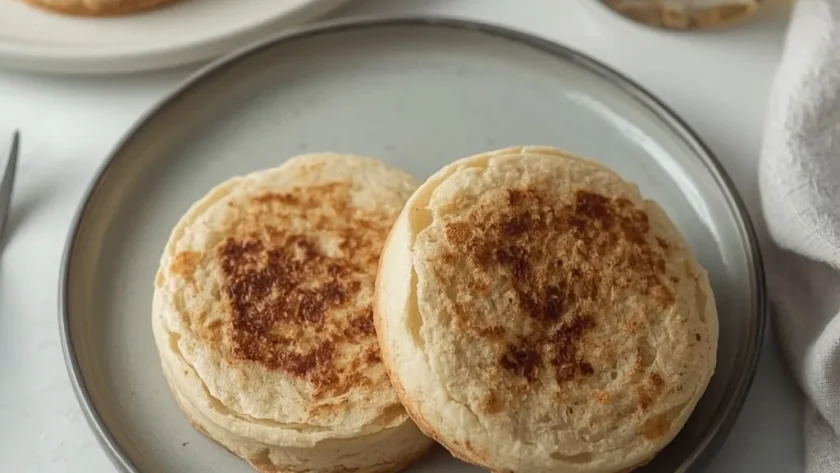
 Mary Berry English Muffins are light, airy griddle-cooked breads with a crisp exterior and the signature nooks and crannies that trap melted butter. Made from a simple yeast dough, they are a classic British breakfast staple you can easily make at home.
Total time is about 2 hours 35 minutes (including rising), and the difficulty is intermediate due to the yeast proofing and griddle cooking. The trickiest part is getting the timing right on the stovetop without burning the bottoms.
What is Mary Berry English Muffins?
These are soft, yeasted bread rounds cooked on a dry griddle rather than baked in an oven. The dough uses milk, butter, and strong white bread flour for a chewy, tender crumb. When split with a fork and toasted, they develop a rough interior perfect for absorbing butter or jam. They are ideal for a leisurely weekend breakfast or brunch.
Why This Recipe is Worth Trying
- Authentic flavour — You get the real taste of homemade muffins, far better than any store-bought version.
- Simple ingredients — Only seven basic pantry items are needed, and most are likely already in your kitchen.
- Versatile serving — Enjoy them with sweet toppings like jam or honey, or savoury options like eggs and bacon.
- Freezer-friendly — They store beautifully, so you can batch‑make and reheat for busy mornings.
Essential Ingredients to Make Mary Berry English Muffins
You need just a few key components, each playing a specific role in texture and rise.
Yeast Base
- 1 cup warm milk (about 110°F / 43°C) — Activates the yeast and adds moisture. Too hot kills the yeast; too cold slows it down.
- 2 1/4 teaspoons active dry yeast (1 packet) — Provides the leavening. Make sure it is fresh and frothy after proofing.
- 1 tablespoon granulated sugar — Feeds the yeast and adds a hint of sweetness.
Dry Ingredients
- 2 cups strong white bread flour (plus extra for dusting) — High protein content creates the chewy structure. All‑purpose flour can be used but gives a softer muffin.
- 1 teaspoon kosher salt — Enhances flavour and controls yeast activity.
Fat and Dusting
- 2 tablespoons unsalted butter, softened — Adds richness and tenderness. Salted butter can be used if you reduce the added salt slightly.
- 1/4 cup fine semolina or cornmeal (for dusting) — Prevents sticking and gives the muffins their characteristic gritty crust.
Handy Kitchen Tools for Best Results
- Large mixing bowl — Needed to combine the dough easily. A glass or ceramic bowl holds heat well for rising.
- Heavy griddle or cast‑iron skillet — Distributes heat evenly for consistent browning. A non‑stick pan also works but may not produce as crisp a crust.
- 3‑inch round cutter (or a glass) — Cuts uniform shapes. A sharp‑edged glass works too, but a cutter is easier to handle.
- Wire cooling rack — Allows air to circulate around the muffins so they cool without becoming soggy.
- Plastic wrap or a damp towel — Keeps the dough covered during rising to prevent a dry skin from forming.
Step‑by‑Step Guide to Making Mary Berry English Muffins
Follow these steps carefully, and you will have perfect homemade muffins with that classic jagged interior.
- Proof the yeast — Combine warm milk, yeast, and sugar in a small bowl. Let stand 5‑10 minutes until frothy. If it does not foam, the yeast is dead — start again.
- Mix the dough — Whisk flour and salt in a large bowl. Add the yeast mixture and softened butter. Stir with a wooden spoon until a sticky dough forms.
- Knead until smooth — Turn onto a lightly floured surface and knead 8‑10 minutes. The dough should be smooth, springy, and no longer sticky. Proper gluten development gives the chewy structure.
- First rise — Place dough in a greased bowl, cover with plastic wrap or a damp towel, and let rise in a warm spot for 1‑1.5 hours until doubled. It should feel puffy and light when poked.
- Shape the muffins — Punch down the dough, roll or pat to 1/2‑inch thickness. Use a 3‑inch cutter to cut out 4‑6 muffins. Re‑roll scraps gently.
- Second rise — Sprinkle a baking sheet with semolina or cornmeal. Place muffins spaced apart, dust tops with more semolina, cover loosely, and let rise 30‑40 minutes until puffed.
- Cook on the griddle — Preheat a heavy griddle or cast‑iron skillet over medium heat. Carefully transfer the risen muffins to the dry hot pan (no oil). Cook 6‑8 minutes per side until deep golden brown and firm.
- Finish in the oven (optional but recommended) — Transfer cooked muffins to a 350°F/177°C oven for 5‑7 minutes to ensure the centers are fully cooked (internal temp about 200°F/93°C). This step is crucial for a light, airy interior.
- Cool completely — Place on a wire rack. Once cool, split with a fork (not a knife) to create the classic rough interior for toasting.
What I Got Wrong (And How I Fixed It)
- Yeast not frothing — I used milk that was too hot and killed the yeast. Now I always check the temperature with a thermometer (aim for 110°F/43°C).
- Dough too sticky after kneading — I added too much flour during kneading, making the muffins dense. The trick is to use only a light dusting; the dough should be slightly tacky but not wet.
- Muffins burned on the bottom — My griddle was too hot. Medium heat is best; if you see dark spots too early, lower the heat and flip sooner.
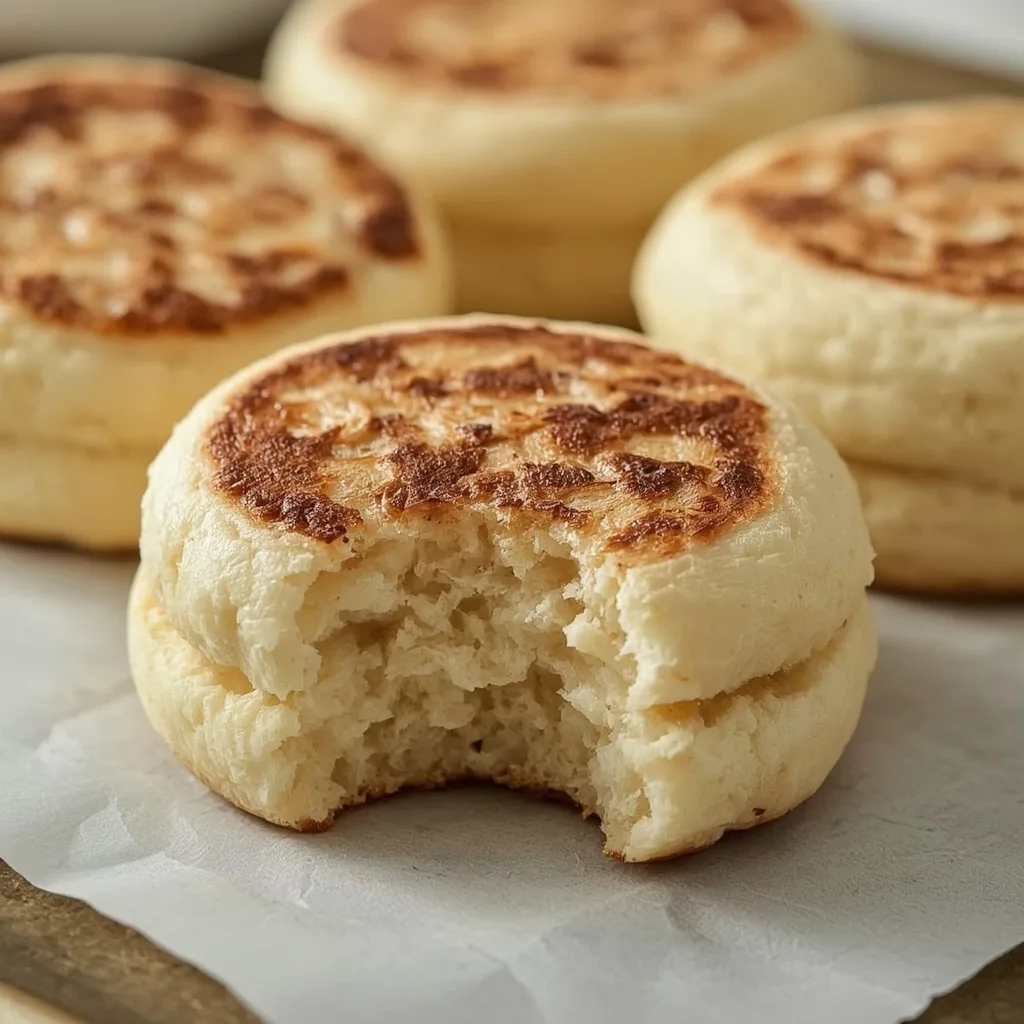
- No nooks and crannies — I used a knife to split them. Always use a fork to gently pull the muffin apart; that gives the rough interior that toasts unevenly.
- Soggy centres — I skipped the oven finishing step. The griddle alone does not always cook the middle fully. Baking for 5‑7 minutes makes a huge difference.
Healthier Version of Mary Berry English Muffins
- Swap whole‑wheat flour — Replace half the bread flour with whole‑wheat flour for extra fibre. The muffins will be slightly denser but still tasty.
- Reduce butter — Use 1 tablespoon instead of 2. The muffins will be a bit less tender but still work well.
- Cut the salt — Lower the salt to 1/2 teaspoon to reduce sodium. Flavour may be a little flat, so consider adding herbs.
- Use low‑fat milk — Replace whole milk with skim or 1% to save calories and fat. The texture will be slightly less rich.
- Skip the sugar — Omit the 1 tablespoon sugar entirely. The yeast will still feed on the natural sugars in the milk. The muffins will be less sweet, which is fine for savoury toppings.
Ingredient Substitutions for Mary Berry English Muffins
- 1 cup warm milk → 1 cup warm buttermilk — Buttermilk adds a tangy flavour and can be used directly. Reduce the salt slightly because buttermilk already contains salt.
- 2 1/4 tsp active dry yeast → 1 3/4 tsp instant yeast — Instant yeast does not need proofing; mix it directly with the flour. No change to rising time needed.
- 2 cups strong white bread flour → 2 cups all‑purpose flour — All‑purpose yields a softer, less chewy muffin. Kneading time may be slightly shorter.
- 2 tbsp unsalted butter → 2 tbsp coconut oil (solid) — Coconut oil adds a subtle coconut flavour. Use it at room temperature, softened like butter.
- 1/4 cup fine semolina → 1/4 cup fine cornmeal — Both give a gritty crust. Cornmeal is slightly coarser, so use an extra sprinkle on the baking sheet.
- kosher salt → fine sea salt (use same amount) — Sea salt dissolves faster. If using table salt, reduce by 1/4 teaspoon because it is more concentrated.
Pairing Ideas: What to Serve With Mary Berry English Muffins
These muffins are incredibly versatile — they work with both sweet and savoury sides. Here are some of my favourite ways to enjoy them.
- Classic butter and jam — Split, toast, and slather with salted butter and strawberry jam. The combination is timeless and never fails.
- Poached eggs and hollandaise — Use the muffin as a base for eggs Benedict. The nooks and crannies soak up the sauce beautifully.
- Smoked salmon and cream cheese — Top toasted muffin halves with cream cheese, smoked salmon, capers, and fresh dill. A perfect brunch option.
- Nutella and sliced banana — For a sweet treat, spread Nutella and add banana slices. The warm muffin melts the Nutella slightly.
- Bacon, lettuce, and tomato — Make a BLT sandwich using the muffin as bread. The sturdy texture holds up well to fillings.
Expert Tips to Make Perfect Mary Berry English Muffins
- Check yeast freshness — Always proof the yeast first. If it does not foam within 10 minutes, discard and start with a new packet.
- Knead until the dough windowpanes — Take a small piece of dough and stretch it gently. If it becomes thin and translucent without tearing, the gluten is developed enough.
- Use a thermometer for the milk — 110°F/43°C is the sweet spot. Too hot kills the yeast; too cold slows it down. A simple kitchen thermometer solves this.
- Do not skip the second rise — The muffins need that 30‑40 minute puff to become light. Skipping it leads to dense, flat muffins.
- Cook on a dry griddle — No oil or butter in the pan. The dry heat creates the crisp, golden crust. If you use fat, the muffins will be greasy and pale.
- Flip gently with a wide spatula — The risen muffins are fragile. A thin metal spatula can tear them. Use a wide, flat spatula and slide it under carefully.
- Finish in the oven — That 5‑7 minute bake at 350°F/177°C ensures the middle is fully cooked. It also helps the interior stay airy rather than doughy.
Creative Ways to Customize Mary Berry English Muffins
- Cinnamon raisin muffins — Add 1 teaspoon ground cinnamon and 1/2 cup raisins to the dry ingredients before mixing. The raisins add sweetness throughout.
- Cheese and herb muffins — Fold in 1/2 cup grated cheddar cheese and 1 tablespoon dried rosemary or thyme after the first rise. The cheese melts slightly during cooking.
- Sourdough version — Replace the active dry yeast with 1/2 cup sourdough starter (100% hydration) and reduce the milk to 3/4 cup. Let the first rise take 3‑4 hours at room temperature.
- Whole‑grain seed muffins — Swap 1/2 cup of the bread flour for whole‑wheat flour and add 2 tablespoons each of flax seeds and sesame seeds. Extra fibre and crunch.
- Blueberry muffins — Gently fold 1 cup fresh or frozen blueberries into the dough after the first rise. Be careful not to burst them; they may colour the dough slightly.
- Spiced chai muffins — Add 1 teaspoon chai spice blend (cardamom, ginger, cinnamon, cloves) to the flour. Serve with honey butter for a fragrant breakfast.
Storing Mary Berry English Muffins the Right Way
- Room temperature (short term) — Place completely cooled muffins in an airtight container or resealable bag. They stay fresh for up to 3 days.
- Refrigeration (not recommended) — The fridge dries out the muffins quickly. Only refrigerate if you live in a very humid climate and need to prevent mould. Use within 2 days.
- Freezer (long term) — Wrap each muffin individually in plastic wrap, then place in a freezer‑safe bag. They keep for up to 3 months. No need to thaw before toasting.
- Vacuum sealing — For extended freezer storage, use a vacuum sealer. This prevents freezer burn and keeps the muffins tasting fresh for up to 6 months.
How to Reheat Mary Berry English Muffins (If Needed)
- Toaster (best method) — Split the muffin with a fork and toast directly in a toaster on medium setting until golden and crisp. Perfect for a quick breakfast.
- Oven (for multiple muffins) — Split and place on a baking sheet. Bake at 350°F/177°C for 5‑7 minutes until heated through and lightly crisp on the edges.
- Air fryer (fast and even) — Split the muffin and place cut‑side up in the air fryer basket. Cook at 350°F/177°C for 3‑4 minutes. Watch closely to avoid burning.
- Skillet (no toaster needed) — Heat a dry skillet over medium heat. Split the muffin and place cut‑side down. Cook 2‑3 minutes until golden and warm.
Nutritional Breakdown (per serving)
Based on 1 serving = 1 muffin (makes 4 muffins total).
- Calories — 319 (around 320)
- Protein — 8.6g (about 9g)
- Fat — 8.4g (roughly 8g)
- Carbohydrates — 53.8g (close to 54g)
- Fiber — 0g
- Sugar — 5.8g
- Sodium — 575mg (about 575mg)
FAQs
Why did my Mary Berry English Muffins turn out dense?
Dense muffins are usually caused by inactive yeast or insufficient kneading. Make sure your yeast is frothy before mixing, and knead the dough until it passes the windowpane test.
Can I use instant yeast instead of active dry yeast?
Yes. Use 1 3/4 teaspoons instant yeast instead of 2 1/4 teaspoons active dry. You can skip the proofing step and mix it directly with the flour.
How long do Mary Berry English Muffins last in the fridge?
I do not recommend refrigerating them because they dry out quickly. They are best stored at room temperature for up to 3 days or frozen for up to 3 months.
What is the best way to split English muffins?
Always use a fork. Insert the tines around the edge and gently pry the muffin apart. This creates the rough interior with nooks and crannies that toast unevenly. A knife gives a flat surface.
Can I make these without a griddle?
Yes. A heavy cast‑iron skillet or a non‑stick frying pan works well. The key is to use a dry pan over medium heat. Avoid overcrowding; cook in batches if needed.
Why does my muffin have a pale ring around the middle?
That is normal — it is where the muffin was sitting on the griddle without making full contact. Toasting will even out the colour. If you want more uniform browning, press the muffins down gently with a spatula halfway through the first side.
Try These Recipes
Wrapping It Up
Homemade Mary Berry English Muffins are a rewarding project that fills your kitchen with a warm, yeasty aroma. Once you taste the difference compared to store‑bought, you will never go back. Give this recipe a try for your next weekend breakfast — you will be glad you did.
PrintMary Berry English Muffins

Light, airy, and perfectly crisp on the outside, these classic English muffins have the signature nooks and crannies. Made with a simple yeast dough and cooked on a griddle, they are a staple for a leisurely breakfast or brunch. Serve split and toasted with butter.
- Prep Time: 20
- Cook Time: 15
- Total Time: 155
- Yield: 4 1x
- Category: Breakfast
- Method: Stovetop
- Cuisine: British
Ingredients
- 1 cup warm milk (about 110°F / 43°C)
- 2 1/4 teaspoons active dry yeast (1 packet)
- 1 tablespoon granulated sugar
- 2 cups strong white bread flour (plus extra for dusting)
- 1 teaspoon kosher salt
- 2 tablespoons unsalted butter, softened
- 1/4 cup fine semolina or cornmeal (for dusting)
Instructions
- In a small bowl, combine warm milk, yeast, and sugar. Stir gently and let stand for 5-10 minutes until frothy. This proofs the yeast and ensures it is active before proceeding.
- In a large mixing bowl, whisk together the flour and salt. Add the yeast mixture and softened butter. Mix with a wooden spoon until a sticky dough forms.
- Turn the dough onto a lightly floured surface and knead for 8-10 minutes until smooth, springy, and no longer sticky. Proper gluten development gives the muffins their chewy structure.
- Place the dough in a greased bowl, cover with plastic wrap or a damp towel, and let rise in a warm place for 1-1.5 hours until doubled in size. The dough should be puffy and light when poked.
- Punch down the risen dough and turn onto a floured surface. Roll or pat to 1/2-inch thickness. Use a 3-inch round cutter (or a glass) to cut out 4-6 muffins. Re-roll scraps if needed.
- Sprinkle a baking sheet evenly with semolina or cornmeal. Place the cut muffins on the sheet, leaving space between them. Dust the tops with more semolina. Cover loosely with plastic wrap and let rise for 30-40 minutes until puffed.
- Meanwhile, preheat a heavy griddle or cast-iron skillet over medium heat. You can also preheat oven to 350°F / 177°C for finishing later.
- Carefully transfer the risen muffins to the hot, dry griddle (no oil). Cook for 6-8 minutes per side, until golden brown and slightly firm. The bottoms should be deep golden with a crisp crust. Flip gently using a spatula.
- After cooking both sides, optionally transfer the muffins to the preheated oven and bake for 5-7 minutes to ensure the centers are fully cooked (internal temperature about 200°F / 93°C). This step is crucial for a light, airy interior.
- Transfer muffins to a wire rack to cool completely. Once cool, they can be split with a fork (not a knife) to create the classic rough interior for toasting.
Notes
Store English muffins in an airtight container at room temperature for up to 3 days. For longer storage, freeze in a sealed bag for up to 3 months. To reheat, split and toast in a toaster or under a broiler until golden. Alternatively, warm in a 350°F oven for 5 minutes.
Nutrition
- Calories: 319
- Sugar: 5.8g
- Sodium: 575mg
- Unsaturated Fat: 3.5g
- Carbohydrates: 53.8g
- Fiber: 0g
- Protein: 8.6g
- Cholesterol: 20mg
Keywords: English muffins, Mary Berry, British breakfast, homemade muffins, griddle bread, yeast breads, breakfast recipe, toasted muffins, easy bread recipe, classic muffins