 Ekani Ella
 Deprecated: explode(): Passing null to parameter #2 ($string) of type string is deprecated in /home/maryberr/public_html/wp-includes/class-wp-duotone.php on line 1194
Deprecated: explode(): Passing null to parameter #2 ($string) of type string is deprecated in /home/maryberr/public_html/wp-includes/class-wp-duotone.php on line 1194
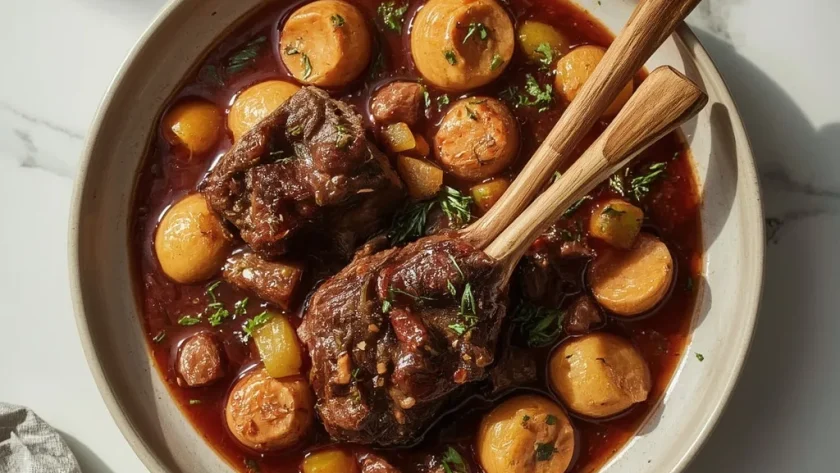
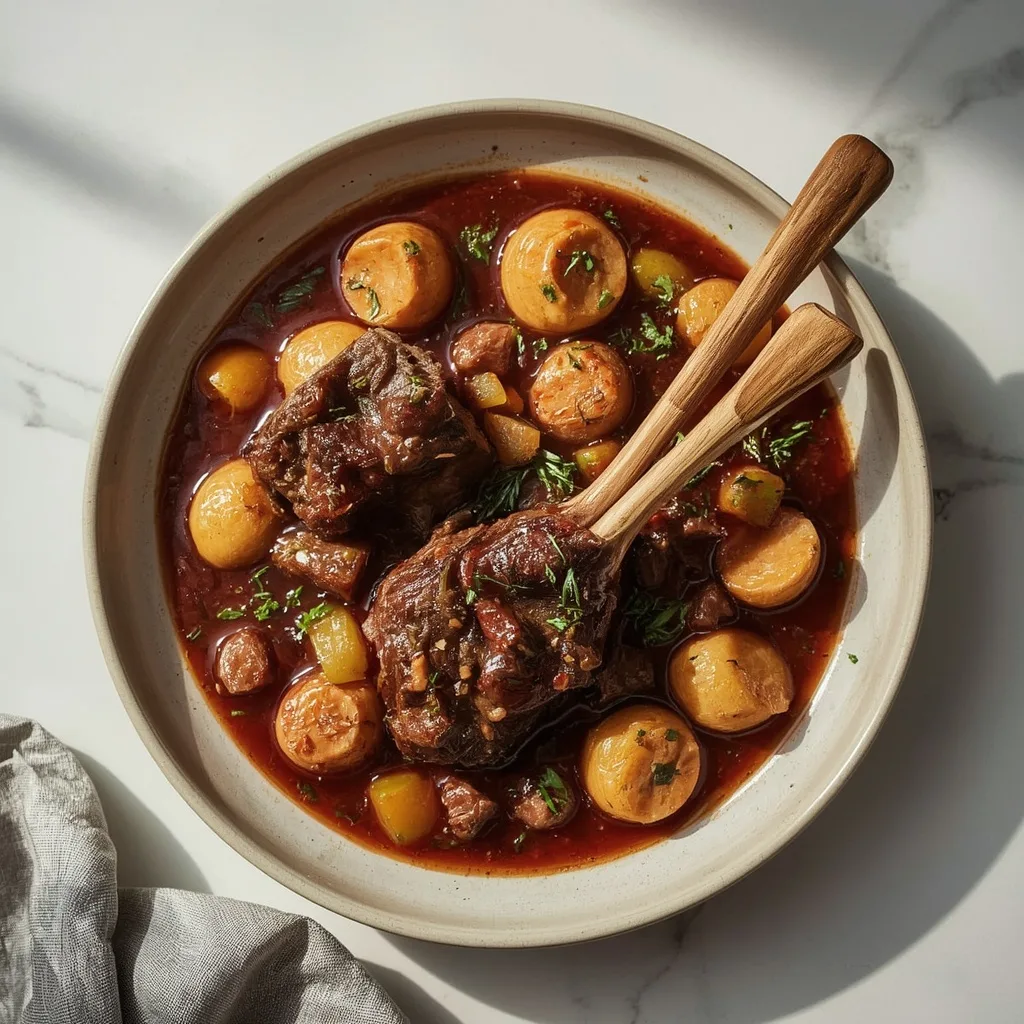
Mary Berry Lamb Shanks are a classic British braised dish that delivers deeply savory, fall-off-the-bone lamb in a rich red wine gravy. The combination of root vegetables, fresh herbs, and a long slow braise creates a sauce that coats every bite with silky flavor.
The total time is just under 3 hours (25 minutes prep, 150 minutes cook), making it an intermediate-level recipe perfect for a Sunday roast or a special gathering. The one tricky part is getting a thorough sear on the shanks without crowding the pot — but that step is well worth the effort.
What is Mary Berry Lamb Shanks?
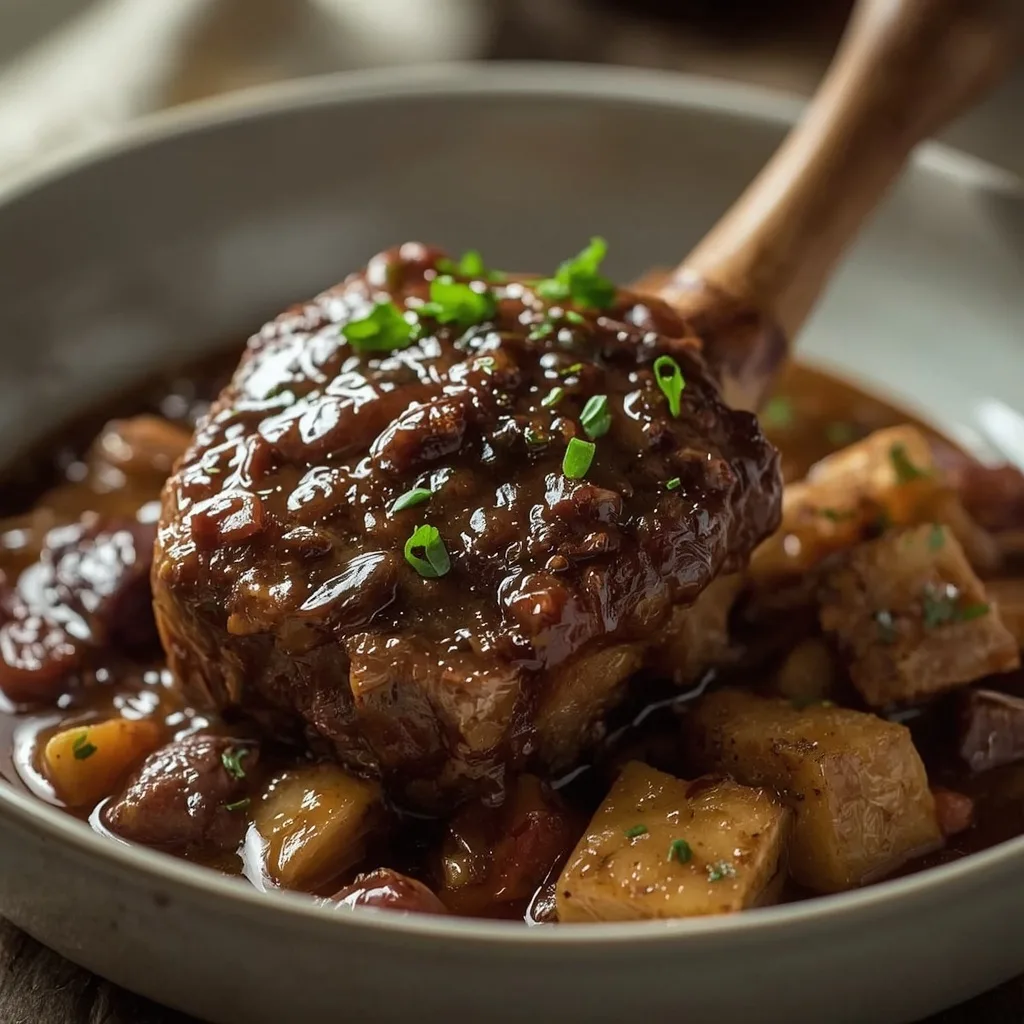
This dish features four lamb shanks braised low and slow in a mixture of dry red wine and beef stock, along with onions, carrots, garlic, and fresh rosemary, thyme, and bay leaf. The meat becomes so tender it pulls apart with a fork, and the braising liquid reduces into a glossy, savory gravy. It’s a warming, elegant centrepiece for a winter meal or a holiday table.
Why This Recipe is Worth Trying
- Foolproof braising method — The oven does most of the work, turning tough lamb shanks into buttery-soft meat with minimal hands-on effort.
- Deep, layered flavour — Browning the shanks and deglazing the pan with wine builds a rich foundation that simple stews can’t match.
- One-pot cooking — Everything from searing to braising happens in a single Dutch oven, which means fewer dishes and easier clean-up.
- Perfect for entertaining — The dish can be made a day ahead and reheated, making it stress-free for dinner parties or holiday dinners.
Essential Ingredients to Make Mary Berry Lamb Shanks
All 14 ingredients work together to create a balanced, hearty braise. Here is what each one does:
The Meat
- 4 lamb shanks (about 1 lb / 450 g each), trimmed of excess fat — The shank is a tough, flavourful cut that becomes meltingly tender when braised. Look for shanks with even thickness so they cook at the same rate.
Aromatics and Vegetables
- 2 medium yellow onions, halved and thinly sliced — They add sweetness and help scrape up the browned bits (fond) from the bottom of the pot.
- 2 large carrots, peeled and cut into ½-inch rounds — They provide gentle sweetness and hold their shape during the long braise.
- 4 cloves garlic, minced — A brief sauté, just one minute, keeps the garlic aromatic without burning.
Liquid and Thickener
- 2 tablespoons all-purpose flour — Sprinkled over the cooked vegetables to thicken the sauce as it simmers.
- 1 cup (240 ml) dry red wine, such as a Burgundy or Côtes du Rhône — Choose a wine you would drink; its acidity and fruitiness balance the richness of the lamb.
- 2 cups (480 ml) low-sodium beef stock — Provides the bulk of the braising liquid; low-sodium lets you control the final salt level.
- 2 tablespoons tomato paste — Adds umami and deep colour to the gravy.
Herbs and Seasoning
- 2 sprigs fresh rosemary — Woody and pine-like, it infuses the sauce during the long cook.
- 4 sprigs fresh thyme — Earthy and slightly floral, it complements lamb beautifully.
- 1 dried bay leaf — Adds a subtle, aromatic background note.
- 1½ teaspoons kosher salt, divided — Used in stages: 1 teaspoon for the initial seasoning, the rest to finish the sauce.
- ½ teaspoon freshly ground black pepper, plus more to taste — A generous crack of pepper balances the richness.
Handy Kitchen Tools for Best Results
- Large Dutch oven or heavy-bottomed, oven-safe pot — A 5- to 6-quart pot with a tight-fitting lid is ideal for searing and braising in one vessel.
- Paper towels — Patting the lamb shanks dry before seasoning is crucial for a good brown crust.
- Tongs — For turning the shanks during searing and transferring them without tearing the meat.
- Wooden spoon or spatula — To scrape up the fond while stirring vegetables and stirring in the flour.
- Large plate or platter — For holding the seared shanks while the vegetables cook.
Step-by-Step Guide to Making Mary Berry Lamb Shanks
Follow these ten steps exactly as written, and you will get a restaurant-worthy result every time.
- Sear the lamb — Preheat oven to 325°F (163°C). Pat shanks dry, season with 1 tsp salt and ¼ tsp pepper. Heat 2 tbsp olive oil in Dutch oven over medium-high heat until shimmering. Sear two shanks at a time (do not crowd) for 4-5 minutes per side until deeply browned. Transfer to plate. Repeat with remaining shanks and last tbsp oil.
- Cook the vegetables — Reduce heat to medium. Add onions and carrots; cook 6-8 minutes, stirring occasionally, until softened and onions are translucent. Scrape up any browned bits from the pot bottom as the vegetables release moisture.
- Add garlic and flour — Add minced garlic; cook 1 minute until fragrant, stirring constantly. Sprinkle flour over vegetables; stir to coat evenly and cook 2 minutes to eliminate raw flour taste.
- Deglaze with wine — Pour in red wine, stirring vigorously to lift any remaining fond. Let wine simmer 3-4 minutes until reduced by about half. Stir in beef stock and tomato paste until fully combined.
- Return lamb and add herbs — Nestle the browned shanks back into the pot. Add rosemary sprigs, thyme sprigs, and bay leaf. The liquid should come about halfway up the shanks; add a splash more stock if needed. Bring to a gentle simmer.
- Braise in the oven — Cover pot with a tight-fitting lid and transfer to preheated oven. Braise for 2 to 2½ hours, turning shanks once halfway through, until meat is very tender and pulls away from the bone easily. Test with a fork — it should slide in with little resistance.
- Remove lamb and herbs — Carefully take pot from oven. Transfer shanks to a warm serving platter and tent loosely with foil. Discard the herb sprigs and bay leaf.
- Thicken the sauce — Skim excess fat from surface of braising liquid with a large spoon. Set pot over medium-high heat and bring to a brisk simmer; cook 8-10 minutes until sauce coats the back of a spoon. Taste and adjust seasoning with remaining salt and pepper.
- Serve — Place each lamb shank on a bed of mashed potatoes, polenta, or buttered egg noodles. Spoon sauce and vegetables generously over the top. Garnish with fresh rosemary if desired.
What I Got Wrong (And How I Fixed It)
- Not drying the lamb thoroughly — The shanks steamed instead of searing. Now I always pat them bone-dry with paper towels before seasoning.
- Crowding the pot during searing — Adding all four shanks at once lowered the pan temperature. I now sear in two batches to get a deep brown crust.
- Skipping the fond scrape — I rushed the vegetable step and missed the browned bits. Those bits are pure flavour; I make sure to stir vigorously while the onions release moisture.
- Adding all the salt at the beginning — The sauce ended up too salty after reduction. Now I use only 1 teaspoon initially and adjust the finished sauce.
- Forgetting to turn the shanks halfway — The top halves were slightly drier. Setting a timer to flip them at the 1-hour mark solves this.
- Not skimming enough fat — The gravy was greasy. Using a large spoon to remove the visible fat layer before reducing the sauce makes a clean, glossy finish.
Healthier Version of Mary Berry Lamb Shanks
- Trim all visible fat from the shanks — Removing the excess fat before cooking reduces the overall fat content by about 30% without losing tenderness.
- Swap half the beef stock for unsalted vegetable stock — This lowers the sodium without sacrificing body. Use 1 cup beef stock + 1 cup vegetable stock.
- Replace the flour with cornstarch slurry — For a gluten-free option, mix 2 tablespoons cornstarch with 3 tablespoons cold water, then stir into the sauce after skimming and simmer until thickened.
- Omit the added salt during the vegetable step — Rely on the tomato paste and reduced wine for seasoning, then add a pinch only if needed at the end.
- Double the carrots and add celery — Increase vegetable volume to boost fiber and nutrients. Add 2 diced celery stalks with the onions and carrots.
Ingredient Substitutions for Mary Berry Lamb Shanks
- Dry red wine (1 cup) → pomegranate juice (1 cup) plus 1 tablespoon balsamic vinegar — Provides acidity and fruity depth without alcohol. The vinegar adds the needed tang.
- Low-sodium beef stock (2 cups) → mushroom stock (2 cups) — Adds deep umami flavour, especially good if you want a vegetarian-friendly sauce base (use jackfruit or seitan instead of lamb if going meatless).
- Fresh rosemary sprigs (2) → 1 teaspoon dried rosemary — Dried is more potent; add it during the flour step so it rehydrates in the sauce. Reduce to 1 teaspoon.
- Fresh thyme sprigs (4) → 1 teaspoon dried thyme — Stir dried thyme in with the flour. It will soften during the braise.
- Dried bay leaf (1) → 2 fresh bay leaves — Fresh bay leaves have a slightly milder flavor; double the quantity.
- All-purpose flour (2 tbsp) → 1½ tablespoons arrowroot powder — A grain-free thickener that works well. Mix with a little cold water before adding to hot liquid.
Pairing Ideas: What to Serve With Mary Berry Lamb Shanks
These rich, saucy shanks call for sides that can soak up every drop of gravy. Here are my favourite pairings:
- Creamy mashed potatoes — The classic bed for the shanks; buttery mashed potatoes catch the sauce and balance the richness.
- Buttered egg noodles — Wide egg noodles tossed in butter make a simple, satisfying base that lets the lamb shine.
- Soft polenta — Creamy cornmeal polenta adds a subtle sweetness that complements the red wine gravy beautifully.
- Roasted root vegetables — Parsnips, celeriac, and turnips roasted with olive oil and rosemary echo the braised vegetables in the dish.
- A crisp green salad with lemon vinaigrette — A bright, acidic salad cuts through the richness and refreshes the palate between bites.
- Full-bodied red wine — Pour the same wine you used in the braise, such as a Burgundy or Côtes du Rhône, to harmonize flavours.
Expert Tips to Make Perfect Mary Berry Lamb Shanks
- Sear in batches without exception — Crowding the pan drops the temperature and causes the meat to steam rather than brown. A deep brown crust builds the foundation of flavour.
- Use a heavy-bottomed pot — A thin pot can scorch the fond or heat unevenly. A Dutch oven distributes heat gently for consistent braising.
- Scrape the fond thoroughly — As you cook the onions and carrots, use the moisture they release to scrape up every brown bit. That fond is pure concentrated flavour.
- Let the wine reduce fully — Simmer the wine for a full 3-4 minutes until it reduces by half. This concentrates the wine’s flavour and removes the sharp alcohol edge.
- Check liquid level halfway — After turning the shanks, quickly check that the liquid still comes halfway up the sides. If it has reduced too much, add a small splash of stock.
- Rest the shanks before serving — After braising, let the shanks rest under foil for 10 minutes. This allows the juices to redistribute so the meat stays moist.
- Season the sauce at the very end — The braising liquid reduces and concentrates flavours. Always taste after reducing and add remaining salt and pepper only then.
Creative Ways to Customize Mary Berry Lamb Shanks
- Add anchovy or miso for extra umami — Stir 2 mashed anchovy fillets or 1 teaspoon white miso paste into the sauce with the tomato paste. It boosts savoury depth without tasting fishy.
- Switch herbs to a Mediterranean twist — Replace rosemary and thyme with 1 teaspoon dried oregano and 1 teaspoon dried marjoram. Add a strip of lemon zest for brightness.
- Include mushrooms for earthiness — Sauté 8 oz sliced cremini mushrooms with the onions and carrots. They add an extra layer of savoury flavour and texture.
- Use lamb shanks with a spice rub — Before searing, rub the shanks with a mix of 1 teaspoon smoked paprika, ½ teaspoon cumin, and ½ teaspoon coriander. This gives a subtle smoky warmth.
- Make it a one-dish meal with potatoes — Add 1 lb halved baby potatoes to the pot halfway through braising. They cook in the sauce and become incredibly flavourful.
- Finish with a gremolata — Sprinkle a mixture of minced parsley, lemon zest, and garlic over the plated shanks just before serving. It adds a fresh, zesty contrast.
Storing Mary Berry Lamb Shanks the Right Way
- Refrigerate in an airtight container — Store the lamb shanks and sauce together. They will keep for up to 3 days in the fridge. Separate the meat from the sauce only if you plan to reduce the sauce further later.
- Freeze in a freezer-safe container — Cool the shanks and sauce completely, then transfer to a container. Leave a little headspace; they stay good for up to 3 months. For easy portioning, freeze the sauce in a separate bag.
- Store the sauce alone for future use — If you have extra gravy, pour it into an ice cube tray. Once frozen, pop the cubes into a freezer bag. Use them to enrich soups, stews, or the next batch of shanks.
- Label with date and reheating method — Write the date and “reheat oven 300°F” on the container. This prevents guessing when you pull it from the freezer.
How to Reheat Mary Berry Lamb Shanks (If Needed)
- Oven method (best) — Thaw overnight in the fridge. Place shanks and sauce in a covered baking dish at 300°F (150°C) for 20 minutes, or until heated through. Add a splash of stock if the sauce looks thick.
- Stovetop method (quick) — Transfer shanks and sauce to a saucepan. Warm gently over medium-low heat, stirring occasionally, for about 10 minutes. Add a small amount of stock to loosen the sauce. Avoid boiling, which can toughen the meat.
- Microwave method (last resort) — Place a single shank and sauce in a microwave-safe dish, cover loosely, and heat in 1-minute bursts at 50% power. The meat can become rubbery if overheated; use only for convenience, not texture.
Nutritional Breakdown (per serving)
Based on 1 serving = one lamb shank plus sauce and vegetables (total 4 servings).
- Calories — 595
- Protein — 45g
- Fat — about 35g
- Carbohydrates — 15g
- Fiber — around 2g
- Sugar — 6g
- Sodium — roughly 820mg
FAQs
Can I make Mary Berry Lamb Shanks in a slow cooker?
Yes. Sear the shanks and cook the vegetables in a pan first, then transfer everything to the slow cooker. Cook on low for 6-8 hours or on high for 4-5 hours. The sauce may be thinner; thicken it on the stovetop after cooking.
How long does Mary Berry Lamb Shanks last in the fridge?
Stored in an airtight container with the sauce, they keep well for up to 3 days. The flavour actually improves after a day as the meat sits in the gravy.
Can I freeze this dish?
Absolutely. Cool the shanks and sauce completely, then transfer to a freezer-safe container. They will stay good for up to 3 months. Thaw overnight in the fridge before reheating.
What if I don’t have a Dutch oven?
Use any heavy-bottomed, oven-safe pot or a deep roasting pan covered tightly with foil. If the pot has a thin base, sear on the stove and then bake covered with foil.
Why is my lamb shank tough after braising?
It likely needed more time. Braise until the meat pulls away from the bone easily — up to 2½ hours. Also, avoid high heat; the gentle 325°F oven keeps the meat tender.
Can I substitute lamb with another meat?
Yes, beef short ribs or oxtail work well with the same braising liquid and method. Adjust cooking time if needed — short ribs may take slightly less time, about 2 hours.
Try These Recipes
Wrapping It Up
Mary Berry Lamb Shanks is a showstopping dish that rewards patience with extraordinary flavour and texture. Once you master the simple steps — searing deeply, deglazing properly, and braising low and slow — you will have a recipe you turn to again and again. I hope you give it a try and enjoy every tender, saucy bite.
PrintMary Berry Lamb Shanks
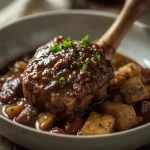
Tender, fall-off-the-bone lamb shanks braised in a rich red wine and beef stock sauce with root vegetables and fresh herbs. This classic British dish delivers deep, savory flavor with a silky, reduced gravy that coats each succulent bite.
- Prep Time: 25
- Cook Time: 150
- Total Time: 175
- Yield: 4 1x
- Category: Main Course
- Method: Braising
- Cuisine: British
Ingredients
- 4 lamb shanks (about 1 lb / 450 g each), trimmed of excess fat
- 3 tablespoons olive oil
- 2 medium yellow onions, halved and thinly sliced
- 2 large carrots, peeled and cut into 1/2-inch rounds
- 4 cloves garlic, minced
- 2 tablespoons all-purpose flour
- 1 cup (240 ml) dry red wine, such as a Burgundy or Côtes du Rhône
- 2 cups (480 ml) low-sodium beef stock
- 2 tablespoons tomato paste
- 2 sprigs fresh rosemary
- 4 sprigs fresh thyme
- 1 dried bay leaf
- 1 1/2 teaspoons kosher salt, divided
- 1/2 teaspoon freshly ground black pepper, plus more to taste
Instructions
- Preheat the oven to 325°F (163°C). Pat the lamb shanks dry with paper towels; this ensures a good sear. Season all over with 1 teaspoon of the kosher salt and 1/4 teaspoon black pepper.
- In a large Dutch oven or heavy-bottomed, oven-safe pot, heat 2 tablespoons of the olive oil over medium-high heat until the oil shimmers. Add two lamb shanks (do not crowd the pot) and sear for 4-5 minutes per side until deeply browned. Transfer to a large plate. Repeat with the remaining shanks using the last tablespoon of oil. This browning builds the foundation of flavor.
- Reduce the heat to medium. Add the sliced onions and carrots to the pot; cook, stirring occasionally, for 6-8 minutes until softened and the onions are translucent. Scrape up the browned bits (fond) from the bottom of the pot as the vegetables release moisture.
- Add the minced garlic and cook for 1 minute until fragrant, stirring constantly to prevent burning. Sprinkle the flour over the vegetables and stir to coat evenly; cook for 2 minutes to eliminate the raw flour taste.
- Pour in the red wine, stirring vigorously to lift any remaining fond. Let the wine simmer for 3-4 minutes until reduced by about half. Stir in the beef stock and tomato paste until fully incorporated.
- Return the lamb shanks to the pot, nestling them into the liquid. Add the rosemary sprigs, thyme sprigs, and bay leaf. The liquid should come about halfway up the shanks; add a splash more stock if needed. Bring the mixture to a gentle simmer on the stovetop.
- Cover the pot with a tight-fitting lid and transfer to the preheated oven. Braise for 2 to 2 1/2 hours, turning the shanks once halfway through, until the meat is very tender and pulls away from the bone easily. Test by piercing with a fork – it should slide in with little resistance.
- Carefully remove the pot from the oven. Transfer the lamb shanks to a warm serving platter and tent loosely with foil. Discard the herb sprigs and bay leaf.
- Skim any excess fat from the surface of the braising liquid with a large spoon. Set the pot over medium-high heat and bring the liquid to a brisk simmer; cook for 8-10 minutes until the sauce thickens enough to coat the back of a spoon. Taste and adjust seasoning with remaining salt and pepper as needed.
- Serve each lamb shank on a bed of mashed potatoes, polenta, or buttered egg noodles. Spoon the sauce and vegetables generously over the top. Garnish with a sprig of fresh rosemary if desired.
Notes
Leftover lamb shanks can be stored in an airtight container in the refrigerator for up to 3 days. To freeze, transfer cooled shanks and sauce to a freezer-safe container; they will keep for up to 3 months. Reheat: Thaw overnight in the fridge, then place in a covered baking dish at 300°F (150°C) for 20 minutes, or warm gently in a saucepan over medium-low heat, adding a splash of stock to loosen the sauce. Avoid microwaving, as it can toughen the meat.
Nutrition
- Calories: 595
- Sugar: 6g
- Sodium: 820mg
- Unsaturated Fat: 12g
- Carbohydrates: 15g
- Fiber: 2g
- Protein: 45g
- Cholesterol: 160mg
Keywords: Mary Berry lamb shanks, braised lamb shanks, British lamb recipe, lamb shank dinner, red wine braised lamb, fall-off-the-bone lamb, Sunday roast lamb, lamb with rosemary and thyme, slow cooked lamb, comfort food lamb