Mary Berry Classic Shortbread
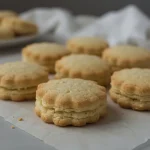
Mary Berry’s classic shortbread is the benchmark: a crisp, sandy, butter-rich biscuit that snaps cleanly and then melts on the tongue. The dough is a simple mix of softened butter, sugar, plain flour and cornflour (or semolina), pressed into a tin, pricked, chilled, then baked low and slow until barely golden. Cut into fingers while still warm and finished with a sprinkling of sugar, they are the perfect partner to a cup of tea.
- Prep Time: 20
- Cook Time: 30
- Total Time: 80
- Yield: 8 fingers 1x
- Category: Dessert
- Method: Baking
- Cuisine: British
Ingredients
- 115g unsalted butter, softened at room temperature
- 60g caster sugar
- 120g plain flour
- 60g cornflour (or the same weight of fine semolina for a crunchier, more traditional bite)
- ¼ tsp fine sea salt
- 1 tbsp (12g) caster sugar, for sprinkling
Instructions
- Put a shelf in the middle of the oven and preheat to 160°C/140°C fan/gas 3. Line the base and sides of a 20 x 15cm shallow baking tin (or an 18cm square tin) with baking paper, leaving a 2.5cm overhang on two sides so you can lift the shortbread out later. Use a heavy, light-coloured tin if you have one, as a dark non-stick tin will over-brown the edges at this low temperature.
- Cut the softened butter into cubes and put it in a large mixing bowl with the 60g caster sugar. Beat with a wooden spoon or an electric hand whisk on medium speed for 3–4 minutes, until the mixture turns pale and feels light and fluffy. Scrape down the bowl once halfway through, as butter clinging to the sides will not aerate and will leave dense pockets.
- Sift the flour, cornflour and salt together into a separate bowl, then whisk briefly to spread the salt evenly. Sifting gives shortbread its famously sandy, melt-in-the-mouth crumb.
- Add the dry ingredients to the creamed butter in two goes, mixing on the lowest speed or folding with a spatula just until no dry streaks remain. Stop the moment the dough comes together, as overworking makes the shortbread tough and it will shrink away from the tin.
- Tip the crumbly dough into the prepared tin and press it into an even layer about 1cm thick, working from the centre outwards with the back of a spoon. Press firmly into the corners and right to the edges so there are no air pockets, since loose patches crack open during baking.
- Prick the surface all over with a fork in neat rows about 1cm apart, pushing right down to the base of the tin. The holes let steam escape as the butter melts, which stops the shortbread doming and splitting. Chill the tin uncovered in the fridge for 30 minutes, until the surface feels firm and cold.
- Bake on the middle shelf for 30–35 minutes, until the surface is pale golden and the edges are a shade deeper, checking at 25 minutes and turning the tin if your oven browns unevenly. It should still look slightly underbaked in the centre and feel soft with a little give; it crisps as it cools. If the edges colour before the centre is set, lay a sheet of foil loosely over the top.
- Set the tin on a wire rack and immediately scatter the 1 tbsp caster sugar evenly over the hot surface. Leave for 5 minutes, as the heat melts the sugar just enough to stick and give that classic sparkle.
- While the shortbread is still warm, cut it into 8 fingers (about 7.5 x 5cm) with a sharp, thin-bladed knife, pressing straight down in one clean movement rather than sawing. Cutting now, while the butter is soft, gives clean edges; if you wait until it is cold it will shatter into ragged pieces.
- Leave the shortbread in the tin on the rack for 10 minutes to firm up, then lift it out using the baking paper and set it directly on the rack to cool completely, about 40 minutes. Shortbread is fragile while hot and only reaches its final crispness once it is fully at room temperature.
- Serve at room temperature, or keep in an airtight tin for a day so the flavours mellow. Shortbread is at its best after 24 hours, when the crumb is at its shortest and sandiest.
Notes
Keep cooled shortbread in an airtight tin at room temperature for up to 1 week; do not put it in the fridge, as the butter hardens and the texture turns grainy. The unbaked dough can be pressed into the tin, wrapped tightly and chilled for up to 3 days, or frozen for up to 2 months, then baked straight from the freezer with 5 extra minutes added to the baking time. Baked shortbread freezes well for up to 3 months: layer the fingers between sheets of baking paper in a rigid container, then defrost at room temperature for 1 hour. To crisp up shortbread that has gone soft, spread the fingers on a baking tray and warm at 150°C/130°C fan/gas 2 for 5 minutes, then cool completely before storing. For a crunchier traditional version, swap the cornflour for the same weight of fine semolina, or press the dough into an 18cm round tin and cut it into 8 wedges while warm.
Nutrition
- Calories: 220
- Sugar: 9g
- Sodium: 74mg
- Unsaturated Fat: 7g
- Carbohydrates: 27g
- Fiber: 0g
- Protein: 2g
- Cholesterol: 30mg
Keywords: mary berry shortbread, classic shortbread recipe, Scottish shortbread, butter shortbread, shortbread fingers, easy shortbread recipe, melt in the mouth shortbread, British biscuits, afternoon tea biscuits, homemade shortbread, traditional shortbread
Find it online: https://maryberrycooks.co.uk/mary-berry-classic-shortbread/